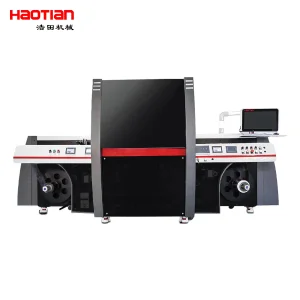
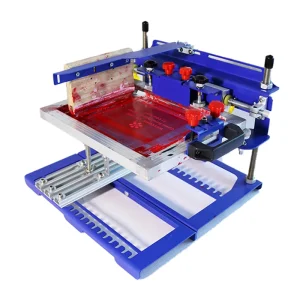
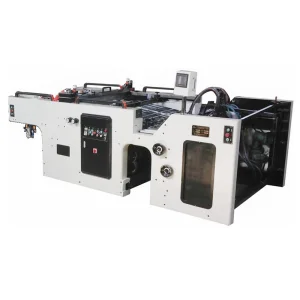
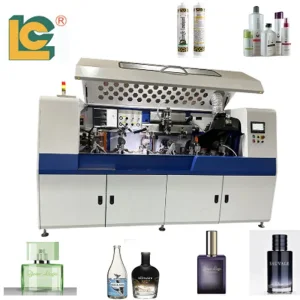
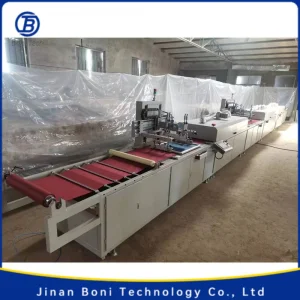
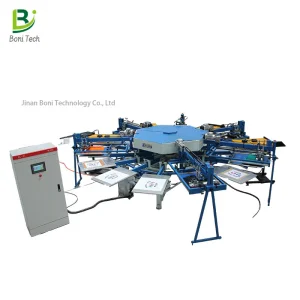
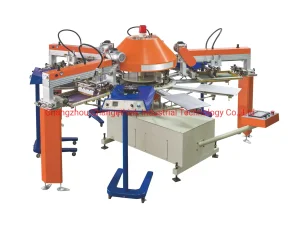
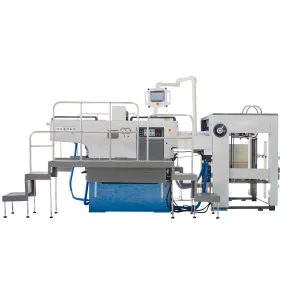
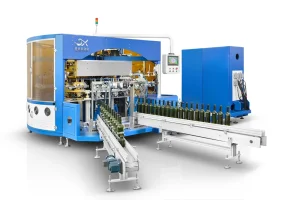
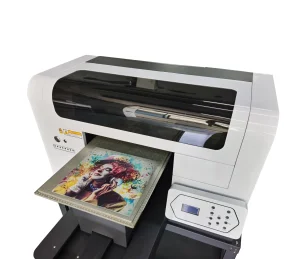
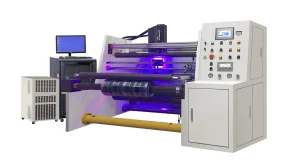
Discover our high-precision equipment engineered for continuous production uptime, flawless ink delivery, and rigorous color reproduction control.

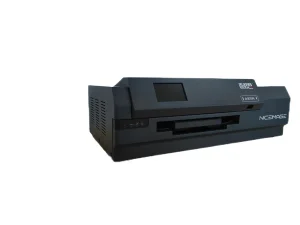
The Industrial Authority in Modern Color Control & High-Output Screen/Digital Printing Solutions
Foshan Fusion Digital Print Co., Ltd. is a dynamic and innovation-driven enterprise specializing in industrial digital printing, advanced inkjet technology, and surface decoration solutions. Located in Foshan, a well-known manufacturing hub in China, the company benefits from a strong industrial ecosystem and convenient global logistics.
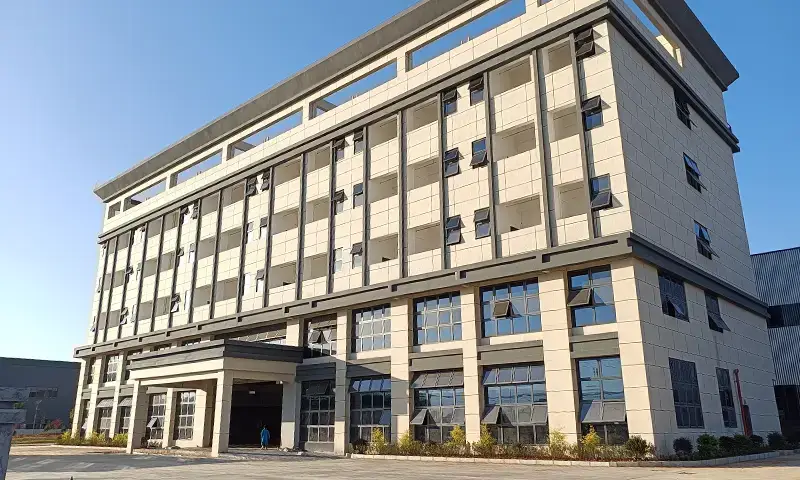
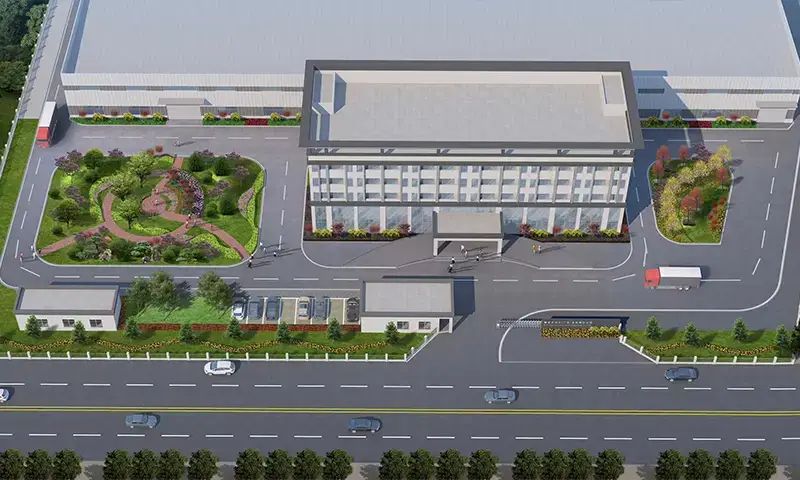
The company operates from a modern production facility covering over 8,000 square meters, equipped with advanced manufacturing and testing equipment to ensure consistent product quality. Foshan Fusion Digital Print Co., Ltd. employs a professional team of more than 120 skilled staff, including experienced engineers, R&D specialists, and technical service personnel dedicated to continuous innovation and customer support.
The industrial printing landscapes are transitioning from standard density-based controls to closed-loop spectral color measurements. Explore the trends defining color execution today.
Modern brand owners demand absolute compliance with spot colors (such as Pantone) without using expensive custom-mixed inks. Adding Orange, Green, and Violet (OGV) to standard CMYK expands the gamut coverage up to 90%, requiring highly complex, multi-dimensional ICC profiles to maintain color stability during high-speed production.
Offline manual color checks are no longer competitive. Industry 4.0 relies on camera-based, real-time spectral measurement engines mounted inside the press. The system automatically measures color bars on moving substrates and dynamically updates print head voltage, droplet volume, or ink zone actuators to maintain Delta E tolerances under 1.5.
With distributed manufacturing, companies expect consistent output across global production lines. Cloud-hosted Color Management Systems (CMS) distribute device-link profiles instantly. A job printed in China and packaged in Central Europe matches precisely, despite differing regional machines, ink batches, and ambient humidity levels.
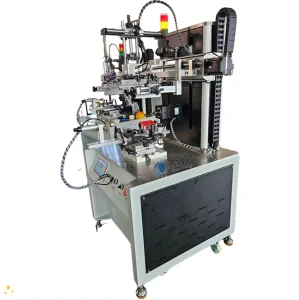
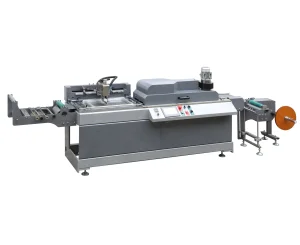
In complex manufacturing, color deviations occur due to substrate chemistry, curing temperatures, and changes in ink viscosity. For instance, in our Automatic CNC Cylinder Silk Screen Printing Machine for Bottles, screen tension changes and ink shearing forces alter dot gain and ink layer thickness.
To counteract this, our systems utilize specialized calibration tools to adjust for these variables:
Selecting a Color Management System or related printing press from China requires evaluating several crucial elements beyond pricing. Use this blueprint to evaluate suppliers.
Ensure the system handles diverse media—including rigid plastics, high-grade glass, elastic webbing, and medical-grade films. Our systems support both screen and digital applications, providing consistent color outputs across different substrates.
Verify that system profiles comply with ISO 12647-2 (Offset Lithography), ISO 15339 (Universal Color Characterization), and Fogra/G7 specifications. This compliance ensures your printed products meet strict international standards.
A high-quality CMS must integrate with standard Raster Image Processors (RIP) such as Caldera, Onyx, or Fiery. This ensures seamless workflows and accurate spot color translations from vector files to physical print layers.
As an industry leader, Foshan Fusion Digital Print Co., Ltd. continuously develops new technologies to improve color precision, output quality, and environmental sustainability.
We are integrating machine learning algorithms directly into our RIP interfaces. By studying historical spectral readings, the system predicts and prevents color drift caused by fluctuations in room temperature, print head wear, and ink viscosity changes before they become visible to the eye.
Eco-friendly printing requires managing the unique spectral curing characteristics of water-based and low-VOC UV inks. Our color profiling algorithms adjust dot gains and ink loads to account for changes in substrate absorption rates, delivering vibrant colors while reducing environmental impact.
Based in Foshan, China's manufacturing heartland, we offer fast access to major international shipping routes, helping streamline lead times and customs clearances for international shipments.
Every printing press, UV LED curing unit, and automation controller we build meets strict CE electrical safety guidelines and RoHS environmental standards, ensuring smooth integration into your workflow.
We provide remote team training, cloud-assisted diagnostic tools, and step-by-step video support to keep your color management software, RIP workflow, and print hardware running smoothly.
Get technical answers to common questions about industrial printing setups and color control workflows.
Delta E measurements evaluate differences in color spacing. Delta E 76 calculates basic distances in the CIE Lab color space, but does not match human vision perfectly. Delta E 94 added weight factors for chroma and hue, while Delta E 2000 is the modern industry standard. It adjusts calculations for hue, chroma, and lightness variations, matching human color perception more closely. Most professional color contracts specify dE2000 < 1.5 for critical color matching.
Printing on non-porous surfaces like plastics, ceramics, and glass requires managing surface tension, ink wetting, and dot spread. Our machines utilize custom ICC profiles created directly on the target material using high-precision spectrophotometers. In addition, we linearize the output and adapt print-head voltage curves to match the substrate, ensuring accurate color rendering and sharp fine text details.
Yes. Combining screen printing (often used for high-opacity white base layers or spot varnishes) with digital printing (used for full-color images) requires uniform color profiling. We achieve this by aligning the screen and digital workflows to a single target workspace, such as GRACoL or Fogra51. This ensures that screen-printed spot colors and digital process colors blend seamlessly, even when inks dry or cure under different conditions.
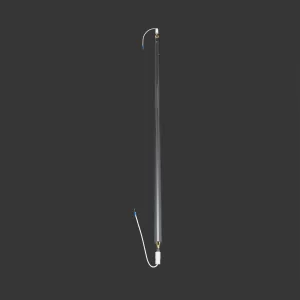
We build specialized UV LED curing units that offer narrow spectral outputs and minimal heat radiation. Standard mercury vapor lamps produce high heat that can warp or discolor thin plastics and films, shifting color outputs. Our UV LED systems deliver uniform curing without thermal stress, keeping target colors stable and consistent through the entire production run.
We provide comprehensive support for international customers, including detailed operating manuals, calibration target sheets, and video tutorials. For complex systems, our engineers offer remote setup assistance and live training sessions to guide you through RIP software settings, machine calibration, and custom profile creation.
Browse our complete lineup of screen printing, digital printing, and UV curing systems engineered for demanding industrial environments.
 Fusion Digital Print