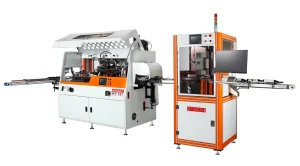
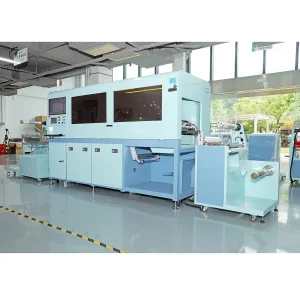
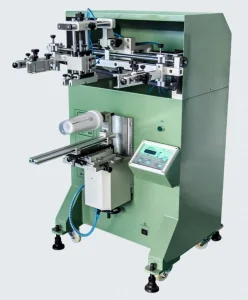
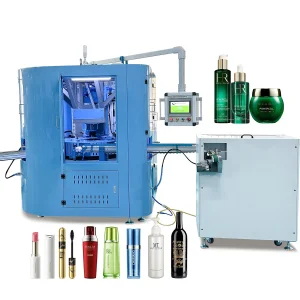
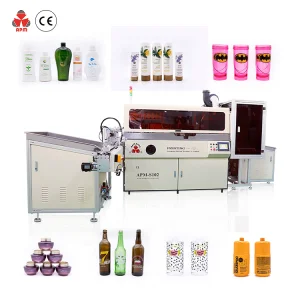
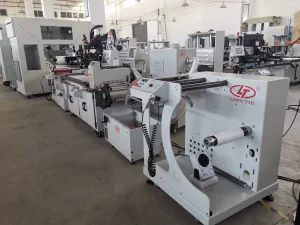
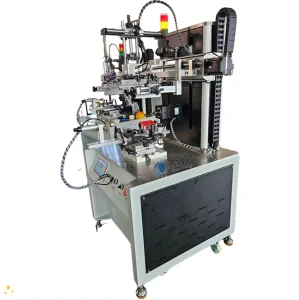
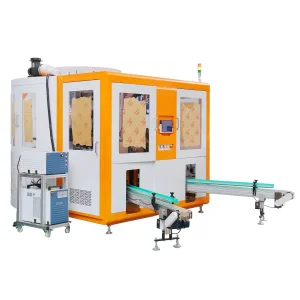
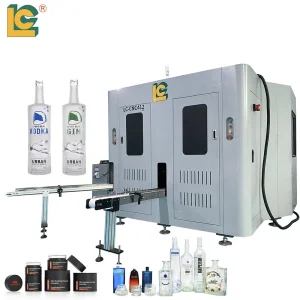
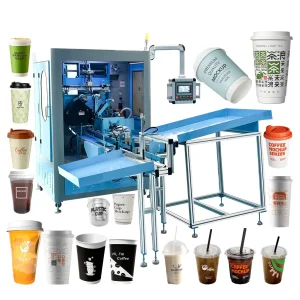
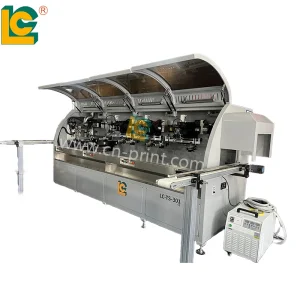
Engineered to meet strict South Korean safety codes and optimized for integration into modern smart-factory environments in the Yeongnam industrial cluster.
Busan, acting as the maritime capital and the primary logistics gateway of South Korea, handles over 75% of the nation’s container cargo. However, beneath its profile as a global shipping titan lies a complex, highly integrated manufacturing ecosystem. The Yeongnam region—spanning Busan, Ulsan, and Gyeongnam—hosts massive industrial clusters specializing in automotive engineering, marine electronics, premium cosmetic packaging, and high-performance polymer components.
In today's highly competitive industrial landscape, traditional manufacturing models are rapidly evolving. The transition to Industry 4.0 has made automation a core operational necessity. Within this context, high-speed, high-precision surface decoration technologies—most notably automatic screen printing machines—have emerged as key assets. Whether applying ultra-fine electrical traces on Flexible Printed Circuits (FPCs), printing high-durability markings on automotive control panels, or executing multi-color high-speed runs on cosmetic containers, precision is non-negotiable. Modern manufacturers demand high-precision alignment, robust throughput, and low operational overhead to stay competitive globally.
As a leading supplier and exporter with strategic operations in the East Asian supply network, we connect Foshan Fusion Digital Print Co., Ltd.’s manufacturing expertise with local demand in Busan and the wider Yeongnam industrial hub. By offering high-efficiency machinery that conforms to strict local safety codes and operational standards, we support local manufacturers in transitioning from labor-intensive manual systems to fully automated, high-precision, and environmentally compliant production lines.
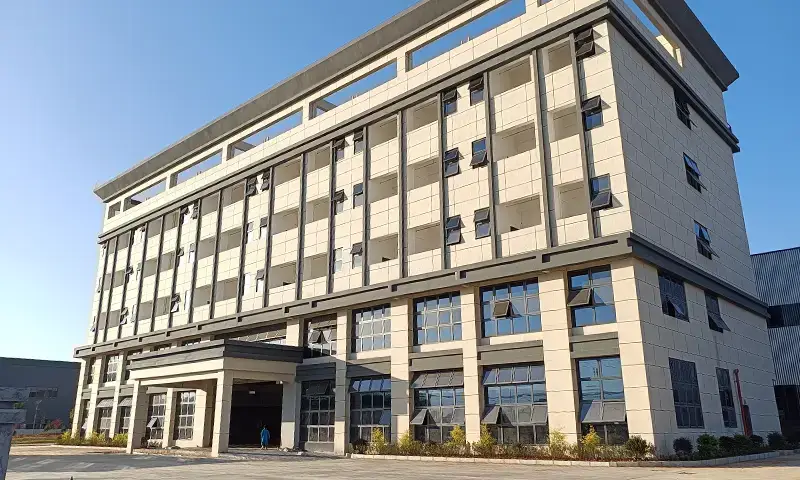
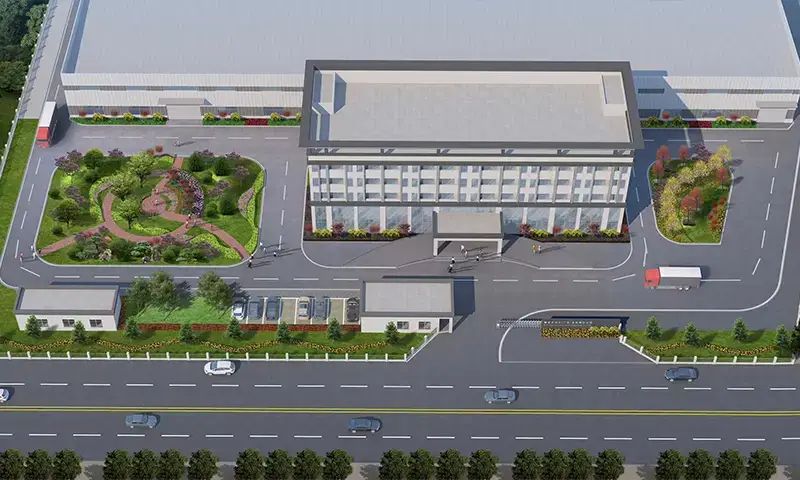
Foshan Fusion Digital Print Co., Ltd. is an innovation-driven enterprise specializing in advanced industrial digital printing, hybrid inkjet-screen technologies, and automated surface decoration systems. Operating out of our modern facility spanning over 8,000 square meters, we maintain a dedicated team of over 120 skilled engineers, R&D scientists, and technical support personnel.
By combining high-speed mechanics, precision multi-axis servo systems, and energy-efficient UV/LED curing methods, our machinery meets the demands of modern high-volume manufacturers. We bridge advanced manufacturing with localized support, ensuring that companies throughout South Korea receive machinery that is fully compatible with local industrial frameworks and safety standards.
On a global scale, the industrial screen printing sector is undergoing a major technological transformation. Standard pneumatic systems are rapidly being replaced by multi-axis, closed-loop servo-driven machines. This transition is motivated by three main factors: the demand for higher register precision, the need for rapid tool-less changeovers, and tightening environmental regulations on volatile organic compounds (VOCs).
Modern printing systems utilize independent servo motors to control print head movement, screen frame positioning, substrate rotation, and squeegee pressure. By replacing mechanical cams and pneumatic linkages, servo control eliminates mechanical play, maintaining register accuracy within tolerances as low as ±0.02 mm. This is critical for modern electronics manufacturing and multi-color printing on complex, non-flat geometries.
Modern automatic screen printing lines integrate auxiliary pre-treatment and curing stages directly into a single continuous process. Systems frequently feature built-in flame treatment or corona discharge modules to raise the surface energy of non-polar polymers like PP and PE, ensuring optimal ink adhesion. Additionally, high-efficiency UV LED systems replace traditional mercury lamps, offering lower energy consumption, minimal heat emission, and instant on/off capabilities.
High-speed printing on plastic or composite sheets often faces challenges from static buildup and ambient temperature fluctuations, which can cause inks to stick to the screen mesh. Innovations like our intelligent temperature-controlled printing beds and synchronized screen lift-off mechanisms prevent these defects. These features allow for continuous, high-speed production runs without the need for frequent manual cleaning or machine adjustments.
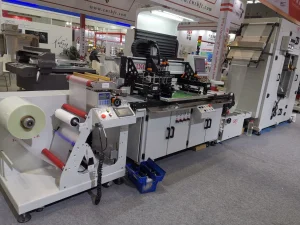
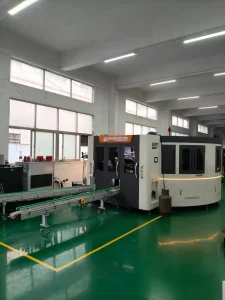
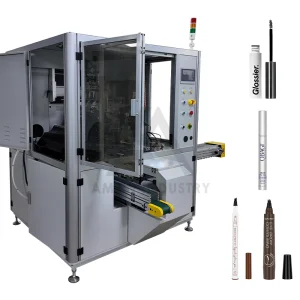
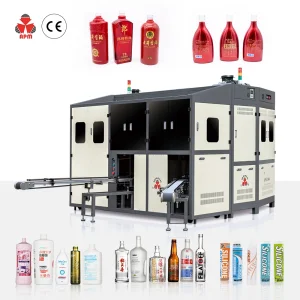
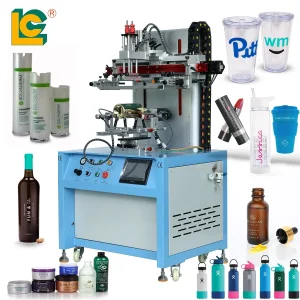
Our line of automatic and semi-automatic screen printing machines is tailored to address the unique manufacturing demands of Busan and its neighboring industrial districts:
Importing capital machinery into South Korea requires adherence to strict safety and performance regulations. To facilitate smooth custom clearance and operational approval, our automatic screen printing equipment is built in compliance with major global safety metrics and can be adapted to meet local Korean standards:
Our product development roadmap is focused on integrating screen printing systems with modern digital manufacturing architectures:
Browse our full range of automatic and semi-automatic industrial printing systems designed for diverse substrate configurations and production demands.
Key technical and commercial inquiries regarding our automatic screen printing machinery and export processes to South Korea.
Our premium machines utilize closed-loop, multi-axis Mitsubishi or Yaskawa servo drives coordinated by Omron or Siemens PLCs. By replacing mechanical links with direct servo control, we achieve registration tolerances within ±0.02mm, which meets the high-precision printing demands for automotive components and cosmetic graphics.
Yes. Our fully automatic rotary screen printing systems (such as the 4-Color and 8-Color Rotary models) are equipped with multi-axis CNC tooling. This configuration allows the printing head, screen mesh, and container rotation to adjust dynamically, enabling high-speed, consistent printing on cylindrical, oval, flat, and tapered surfaces.
For plastic substrates such as PP, PE, and HDPE—which have low surface energy—we integrate automatic flame treatment or corona discharge stations directly into the production line. This process alters the chemical characteristics of the plastic surface, ensuring strong ink adhesion and cross-hatch test compliance.
Our standard machines conform to CE standards. For shipments headed to South Korea, we configure the control panels, circuit designs, safety switches, and shielding to align with KOSHA directives and local electrical safety guidelines.
We offer comprehensive technical support, including remote video commissioning and detailed setup documentation. For complex multi-color production lines, we can dispatch qualified service technicians to your facility in the Busan/Gyeongnam industrial area to handle mechanical installation, sensor calibration, and operator training.
Featured on heavy-duty models like our Qy-12040, intelligent temperature control monitors and regulates the printing bed temperature. This maintains ink viscosity within its optimal range, preventing sticking issues and reducing screen blockages during long or high-speed runs.
 Fusion Digital Print