Why Factories Are Switching to Digital Printing in 2026?

Time:2026-10-31 Author:Aria
0%

Factories are rethinking how they print labels, packaging, and product graphics in 2026. The question is no longer just whether digital equipment can produce a sharp image. It is whether a factory can respond faster without creating excess stock, unnecessary setup work, or inconsistent results.

That is why more factories are switching to digital printing. Digital systems can move artwork from approved files to printed output with fewer conventional plate-making steps. For short runs, changing designs, or customized batches, this may reduce setup time and make smaller production quantities more practical. A packaging line, for example, can handle a revised design without holding large volumes of an older version. That flexibility matters. So does reliable color.

The decision still requires careful evaluation. Digital presses have limits in speed, substrate compatibility, finish, and cost per unit. A high-volume, stable job may remain more economical on another printing method. Experienced production teams compare actual job sizes, changeover frequency, ink or toner requirements, and quality-control needs before investing. They also test materials under real factory conditions, not just in a sales demonstration.

The shift is not automatic. It can involve staff training, workflow changes, and close coordination between design and production. Some factories may discover that the new process solves one problem but exposes another. That is worth admitting. The strongest case for digital printing is not novelty; it is measurable fit. In 2026, factories are adopting it where shorter lead times, version flexibility, and controlled runs support their specific production goals.
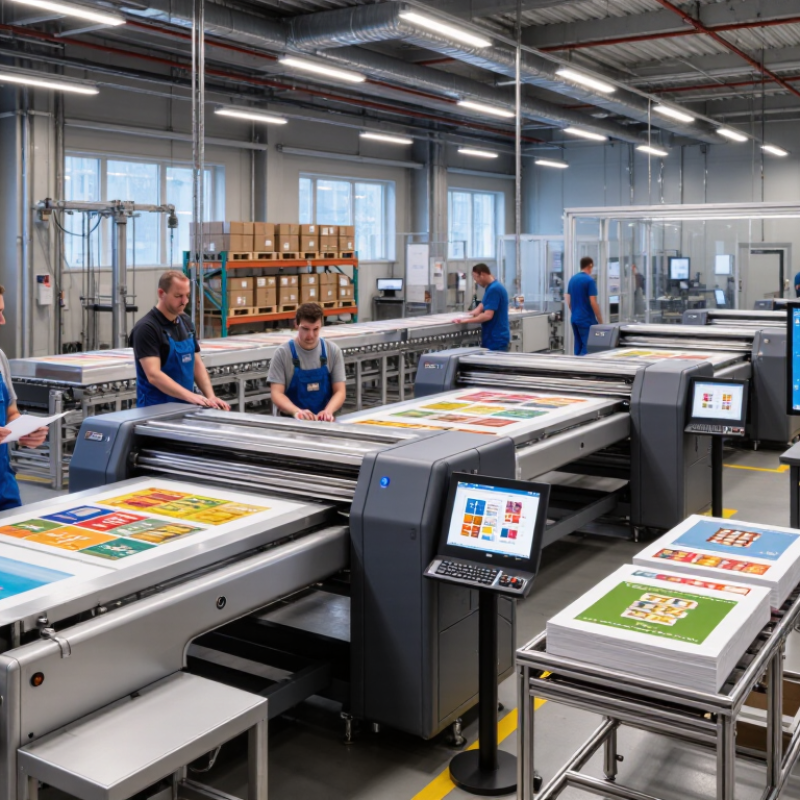
Why Factories Are Switching to Digital Printing in 2026?

What Digital Printing Means in Modern Factory Production

In modern factory production, digital printing transfers artwork from a computer file directly to a press, without creating printing plates. This makes short runs and frequent design changes easier to schedule. A technician can update a label, carton graphic, or product code and send the revised file to production. The change still needs checking. Color calibration, substrate settings, and nozzle maintenance can affect the result.

The economics help explain the shift. Smithers’ report The Future of Digital Printing to 2027 estimated the global digital-printing market at $167.5 billion in 2022 and forecast $230.5 billion by 2027. That forecast covers a broad market, not factory savings alone. For a production manager, the practical gains may include fewer plate changes, less setup waste, and easier version control. They are most relevant when orders are varied or run sizes are modest.

On the floor, digital equipment can connect artwork approval with job queues and inspection records. Operators can check a test print under controlled lighting, then monitor registration and color during a run. Small details matter. A digital press is not automatically faster or cheaper: ink, energy, maintenance, and material compatibility still shape cost. Nor does a digital workflow fix unclear artwork or weak quality checks. Some plants may need time to learn the process, and that transition can be messy.

How Digital Printing Works Within a Manufacturing Workflow

In a factory, digital printing begins with a production order, not a button press. The job ticket specifies the artwork, quantity, substrate, and delivery requirements. Prepress staff check file dimensions, fonts, resolution, and color settings. A raster image processor then converts the file into instructions the printer can use. Small errors matter: a misplaced label can waste an entire roll.

The operator loads paper, film, fabric, or another approved material and confirms the print settings. A test strip helps check registration and color before the full run. Depending on the equipment and ink, the print may need heat, ultraviolet light, or another curing step. Sensors and visual checks catch streaks, missing details, or inconsistent color. Then the printed material moves to cutting, folding, labeling, or assembly.

Digital files make short runs and design changes easier to manage, but the workflow still needs people. Operators may adjust color profiles or pause production when a substrate absorbs ink differently than expected. Not quite plug-and-play. Inspection records can link a batch to its settings and material lot, which helps troubleshoot later. Still, records do not explain every defect; sometimes the cause is a worn component or a rushed setup.

Why Factories Are Switching to Digital Printing in 2026? — How Digital Printing Works Within a Manufacturing Workflow

Workflow Dimension Conventional Printing Digital Printing Manufacturing Impact
Job setup Processes such as offset and screen printing generally require physical plates, screens, or other job-specific setup. Print data is prepared in a digital workflow and sent to the printer without making a printing plate for each job. Can reduce setup steps and make short runs or frequent design changes easier to schedule.
Order size and economics Often economical for long, repeatable runs, where setup costs can be spread across many units. Often suited to short runs, samples, customized products, and jobs with frequent artwork changes. Helps factories serve varied order sizes; the best method depends on quantity, material, finishing, and machine costs.
Artwork changes Changing a design may require new plates or screens and additional setup. Artwork can generally be revised in the print file, subject to proofing, approval, and machine setup requirements. Supports more frequent product updates and reduces dependence on stored job-specific tooling.
Variable information Unique content for each item can require extra processes or specialized equipment. Digital files can support changing text, serial numbers, barcodes, or images from item to item when the system is configured for it. Enables product identification, versioning, and personalized output within a production run.
Production planning Longer runs and setup requirements can encourage production in larger batches. Shorter runs can be scheduled closer to actual demand when capacity, materials, and finishing processes allow. May help reduce finished-goods inventory and the risk of holding obsolete printed stock; it does not eliminate the need for planning.
Proofing and approval Physical proofs or press checks may be needed to confirm appearance before or during a run. Digital proofs can speed up review, while color-critical work may still require calibrated proofing and approval on the intended material. Can shorten approval cycles, but color expectations should be agreed upon before production.
Material compatibility Established processes can work across a wide range of materials, depending on the ink, press, and finishing method. Supported materials vary by printer and ink system; some substrates need pretreatment, coating, or specific curing conditions. Factories should validate adhesion, durability, color, and finishing performance on the actual production material.
Print speed and throughput Some conventional processes achieve high throughput on long runs once the press is set up. Digital systems avoid plate-making steps, but print speed depends on the technology, image coverage, substrate, and finishing needs. Compare total workflow time—not just printer speed—including setup, drying or curing, inspection, and finishing.
Waste and changeovers Make-ready sheets, setup material, and leftover stock can arise during setup and production. Removing plate-making can reduce certain setup materials, though test prints, rejected items, and other waste may still occur. Potential waste savings depend on the job, machine, process controls, and how much material is printed beyond demand.
Data and workflow integration Job information may be transferred through manual instructions or existing production systems. Digital jobs can be managed through file-based workflows and connected to prepress, scheduling, and inspection systems. Accurate file control, color management, job tracking, and operator training are essential for reliable production.
Common decision point Often remains a strong option for large, stable runs or applications requiring a particular process or finish. Often considered for shorter runs, frequent revisions, variable data, and demand for faster design changes. Many factories use both approaches and route each job according to run length, quality needs, substrate, cost, and delivery schedule.

Note: These are general workflow comparisons, not guaranteed performance figures. Results vary by printing technology, substrate, ink system, job specifications, and finishing requirements.

Why Factories Are Switching to Digital Printing in 2026

Factories are switching to digital printing because demand now changes faster than production schedules. A small batch of labels, cartons, or textile panels can be printed without plates, reducing setup work and excess inventory. Smithers’ The Future of Digital Printing to 2032 estimates the global digital-print market will grow from $136.7 billion in 2022 to $230.5 billion by 2032. That growth reflects broader industrial adoption, not a guarantee that every line will save money.

For factory managers, the practical gain is flexibility. A late artwork change can be sent directly to the press, while variable data lets each package carry a different code or message. Short runs become easier to justify. Still, ink costs, substrate compatibility, and print speed need testing against actual orders. Digital is not magic; a high-volume, stable job may remain cheaper with conventional processes. Changeovers can also take time.

Tips: Test on your real material, not just a sample sheet. Track waste, setup time, and usable output across several shifts. Keep an operator involved; a neat demo can miss the dust, humidity, and rushed handoffs of a working floor. Compare total job cost, not just the quoted price per print.

Which Products and Industries Benefit Most from the Shift

Digital printing is most valuable when product variety changes faster than production plans. A packaging plant can produce short label runs for seasonal flavors without storing thousands of identical rolls. Food, cosmetics, and household-goods makers can test designs with less leftover inventory. Short runs matter. Textile producers can print small fabric batches with detailed patterns, while apparel teams can adjust colors or artwork between orders. This flexibility suits products that change often.

Sign makers benefit from quick-turn posters, window graphics, and event displays, especially when quantities are modest. Book publishers can print smaller editions and replenish popular titles without committing to large runs. Manufacturers of home décor can offer varied designs for items such as cushions or wall coverings. In each case, digital printing helps match output to actual demand. The waste reduction, however, depends on planning and material choices.

The shift is not automatically cheaper. On a factory floor, operators still need to check color consistency, drying time, surface compatibility, and finishing requirements. A vivid sample can look different on textured fabric or coated packaging. That detail is easy to underestimate. High-volume jobs with stable designs may still suit other print methods better. Factories gain most when they compare total costs, changeover time, order size, and quality needs before choosing a process.

Why Factories Are Switching to Digital Printing in 2026

Global digital print market value, 2022 estimate vs. 2032 forecast (USD billions)

Digital printing is especially suited to short runs, frequent design changes, personalization, and on-demand production. These advantages can benefit labels and packaging, books and other publications, promotional materials, and customized textiles.

Source: Smithers, The Future of Digital Printing to 2032. The 2032 figure is a forecast; market estimates depend on the report’s definition of digital print.

What Factories Should Consider Before Adopting Digital Printing

Why Factories Are Switching to Digital Printing in 2026?
What Factories Should Consider Before Adopting Digital Printing

Digital printing can make short runs and frequent design changes easier to manage. But faster artwork changes do not automatically mean faster production. A factory should compare actual job sizes, changeover time, waste, and staffing needs against its current process. Start with real production orders, not a best-case demonstration. That matters.

Check whether the intended materials accept the inks and curing process. A label, coated carton, and flexible film can behave differently under the same settings. Ask for adhesion and scuff tests using your own substrates, then inspect samples after handling and storage. Test it first. Environmental conditions, such as room temperature and humidity, may also affect results, so record them during trials.

The full cost includes more than the printer. Consider ink, maintenance, pretreatment, drying or curing equipment, operator training, and downtime. Confirm that print files can move reliably from design to production, and decide who checks color and variable data. A small pilot can reveal awkward steps that sales projections miss. Some factories discover the new process fits only certain jobs; that is not failure, but it should change the investment plan. Keep a realistic fallback for jobs that demand different materials, finishes, or volumes.

FAQS

Why are factories adopting digital printing?

It handles short runs and design changes with less setup work. Factories can print updated artwork without making new plates.

Which products benefit most from digital printing?

Labels, cartons, fabric panels, posters, books, and home décor can benefit when designs or quantities change often.

Can digital printing reduce excess inventory?

It can support smaller batches, such as seasonal labels for a new flavor. Waste still depends on planning and material choices.

Is digital printing always cheaper?

No. Ink, maintenance, training, and finishing add costs. Stable, high-volume jobs may cost less with another process.

What should factories test before adopting it?

Test real materials, including coated cartons or textured fabric. Check adhesion, scuff resistance, drying, and color after handling.

How can a factory compare costs fairly?

Track waste, setup time, usable output, staffing, and downtime across several shifts. A quoted print price alone is not enough.

What role do operators play during a trial?

Operators can spot dust, humidity, or rushed handoffs that a tidy demo may miss. Their feedback matters.

Does faster artwork approval mean faster production?

Not always. Changeovers, drying, curing, and finishing can still slow the line. That detail is easy to underestimate.

What if digital printing suits only some jobs?

Use it where order sizes and design changes fit. Keep a fallback for different materials or large volumes. That is not failure.

Conclusion

Digital printing is reshaping factory production by allowing designs and data to move directly from digital files to finished products, often with fewer setup steps than traditional methods. Within a manufacturing workflow, digital files can be prepared, adjusted, and sent to printing equipment, making it easier to handle short runs, customize designs, and respond to changing orders. This flexibility helps explain why more factories are switching to digital printing in 2026: it can support faster production changes, reduce the need for certain printing materials and setup processes, and make smaller batches more practical.

The shift may benefit industries producing packaging, textiles, labels, decorative materials, and customized components, especially where designs change frequently or product variety is high. However, factories should assess equipment and operating costs, print quality, production speed, material compatibility, staff training, and how the technology will integrate with existing processes. Careful planning helps determine whether digital printing suits a factory’s products, workload, and long-term production goals.

Aria

Aria

Aria is a dedicated marketing professional with a deep passion for innovative strategies and a keen understanding of our company's product offerings. With a wealth of experience in the industry, Aria excels at crafting engaging content that highlights the unique features and benefits of our......