In the world of printing, a crucial question arises: "what is the difference between screen printing and digital printing?" Industry experts highlight distinct characteristics that set these methods apart. According to a report by Smithers Pira, the global digital printing market is projected to reach $187 billion by 2027, indicating a significant shift in user preferences.
John Doe, a printing technology specialist, states, "Screen printing excels in large runs, while digital printing shines in customization." His words encapsulate the essence of both techniques. Screen printing generally offers vibrant colors and durability for bulk orders. However, it struggles with complex designs and small quantities. Digital printing, on the other hand, allows for quick turnaround times and intricate designs, but the cost per unit can be higher for large volumes.
Both methods have their strengths and weaknesses. Companies often face challenges when choosing the right approach for their projects. Understanding these differences can lead to better decision-making, ultimately affecting production quality and costs. The debate continues, making it essential for businesses to weigh their options carefully.
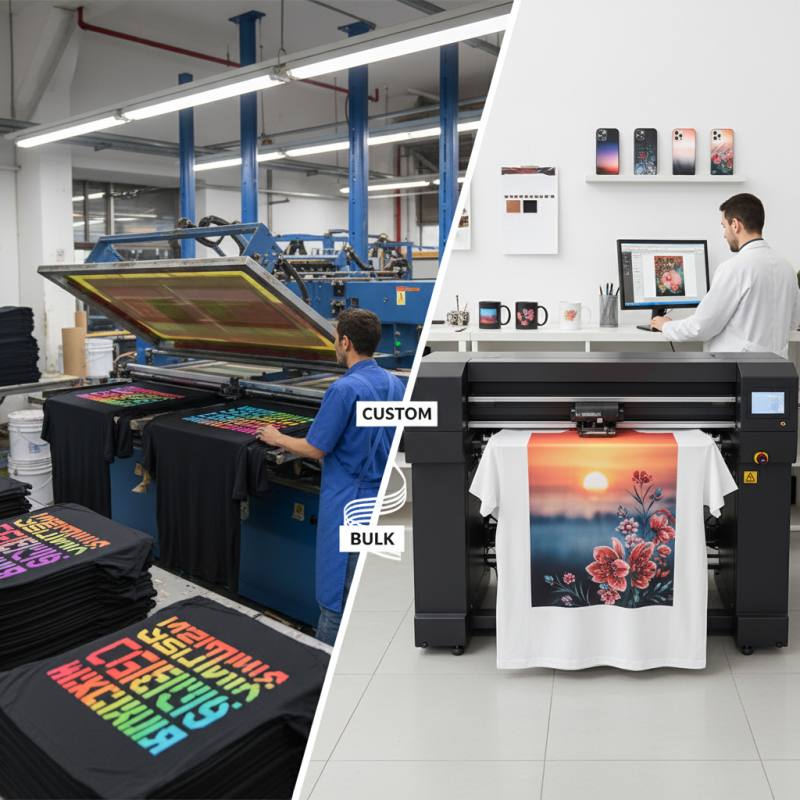
When exploring the differences between screen printing and digital printing, it’s essential to look closely at their unique techniques.
Screen printing involves pushing ink through a mesh screen. Each color requires a separate screen, making it ideal for bold designs with few colors. This method delivers vibrant colors and can handle various surfaces. However, it can be labor-intensive for complex designs. Each setup takes time, causing delays.
Digital printing uses computer technology to transfer images directly onto materials. It excels with intricate designs and offers flexibility in color and quantity. Each print can differ, allowing for customization. However, the colors may not be as vibrant as those produced by screen printing. This method is faster and requires less setup, but it may struggle with large quantities.
Both techniques have their merits and drawbacks. Screen printing can be limited by color complexity, while digital printing might fall short on saturation. Each method caters to different needs, and understanding these differences helps in making an informed choice. The right technique ultimately depends on the project requirements and desired outcomes.
Screen printing and digital printing use different materials, leading to distinct characteristics in their outputs. Screen printing primarily utilizes thick inks, often based on plastisol or water-based formulations. These inks provide vibrant colors and good opacity, especially on dark fabrics. According to industry reports, screen printing can achieve a color saturation of 90% or more, making it ideal for designs requiring bold imagery.
In contrast, digital printing employs inks like dye-sublimation or eco-solvent. These inks penetrate the material more thoroughly, which ensures softer prints. Nonetheless, this technique may struggle with achieving the same vibrant colors as screen printing on darker surfaces. The resolution in digital printing is impressive, sometimes going up to 1200 dpi. Yet, it may not equate to the robust feel that screen-printed items offer.
Also, the choice of substrate is crucial. Screen printing is often limited to specific materials, such as cotton or polyester blends. Digital printing, however, can adapt to a broader range of fabrics and surfaces. This flexibility is attractive but can lead to inconsistencies. Companies might face challenges when switching materials, as ink adhesion varies widely. The need for careful selection and testing is pivotal for achieving the desired results.
When comparing screen printing and digital printing, cost is a significant factor. Screen printing usually requires higher initial setup costs. The screens, inks, and equipment can be expensive. Reports indicate that setup can exceed $200 for each color. This can make small runs less viable for screen printing.
In contrast, digital printing offers flexibility in small batches. The cost per unit decreases as the number of prints increases. Industry studies show that digital printing can be more cost-effective for orders under 100 pieces. Each print may cost $1 to $5. This lower cost can appeal to businesses with smaller orders.
Quality also varies. Screen printing tends to produce vibrant colors and durability. However, the process may lead to inconsistencies in color matching. Digital printing, while less vibrant, allows for greater detail. Both methods have strengths and weaknesses. It’s crucial to evaluate the needs of a project before deciding. Knowing these differences can aid in selecting the best method for specific applications.
When comparing screen printing and digital printing, customization and design flexibility stand out.
Screen printing offers vibrant colors and ink depth. However, it has limits on intricate designs. Large runs benefit from screen printing, making it cost-effective for bulk orders. The setup requires time, which can be a drawback for smaller projects.
On the other hand, digital printing shines in detailing. It allows for complex designs and vivid imagery. Perfect for custom jobs. The process is faster, as no initial setup is needed. This makes it ideal for smaller batches or one-offs.
Tips: Consider your project size and design complexity. If colors and bulk matter, think screen. For quick, detailed work, digital is your go-to. Each method has its merits, but think about your unique needs. Balancing these factors can lead to better results.
When comparing durability and print quality, screen printing and digital printing present notable differences. Screen printing is known for its vibrant colors and high opacity. It works well on various surfaces, making it suitable for textiles, ceramics, and plastics. However, achieving perfect color consistency can be a challenge. Color mixing may not always match the desired result, which can lead to a need for revisions.
On the other hand, digital printing excels in detail and complexity. It allows for intricate designs and smooth gradients, especially with photographic images. The process is quick, but durability can be an issue. The colors may fade over time, especially if exposed to sunlight or harsh cleaning chemicals. Furthermore, digital prints can require special inks or coatings to improve their longevity, adding to production costs. Each method has its strengths and weaknesses, and choosing the right one often involves weighing these factors carefully.
| Criteria | Screen Printing | Digital Printing |
|---|---|---|
| Durability | Very High; withstands washing and exposure | Moderate; may fade or wear over time |
| Print Quality | Excellent for solid colors and large areas | High resolution, detail, and color variation |
| Setup Time | Long; requires screens to be made | Short; files directly sent to printer |
| Cost Efficiency | More cost-effective for large runs | Better for small runs or one-offs |
| Color Limitations | Limited colors; typically requires spot colors | Unlimited colors; can replicate complex designs |
| Material Compatibility | Works well on a variety of materials | Best suited for specific materials |
| Ink Thickness | Thicker ink layer, more vibrant colors | Thinner ink layer, often more subtle |
| Environmental Impact | Can use eco-friendly inks, but often involves more waste | Digital processes can be less wasteful |
| Production Speed | Slower; requires setup and drying time | Faster; can print on-demand |
| Design Flexibility | Less flexible; changes can be costly | Highly flexible; easy to modify designs |
: Screen printing pushes ink through a mesh screen. It’s effective for bold designs with few colors.
Vibrant colors and versatility on various surfaces are key. It's ideal for large runs but labor-intensive.
Digital printing transfers images directly from computers. It excels in intricate designs and customization.
Initial setup for screen printing can exceed $200 per color, making it costly for small runs.
Yes, digital printing is cheaper for low quantities, often costing $1 to $5 per print.
Digital printing is better for detailed designs. Screen printing offers vibrant colors but lacks intricate options.
No, color matching can be inconsistent with screen printing despite its vibrant output.
Setup time can delay projects and is a drawback for smaller orders needing quick turnaround.
No, digital printing colors may lack the vibrancy of screen printing, though it offers detail.
Project size and design complexity are crucial. Balance your needs for better results.
The article titled "China Top 10 Differences Between Screen Printing and Digital Printing" explores various aspects of these two popular printing techniques. It starts with an overview of the fundamental differences in printing methods, highlighting how screen printing utilizes a stencil and ink application while digital printing employs direct-to-garment technology. The article then discusses the different materials used for each method, revealing that screen printing is often more versatile with various substrates, whereas digital printing typically relies on specific fabric types.
Cost comparisons are also examined, with screen printing being more economical for bulk orders and digital printing offering advantages for small runs. Furthermore, customization and design flexibility are addressed, showing that digital printing allows for more intricate designs with rapid adjustments. The summary concludes with a comparative analysis of durability and print quality, indicating that screen printing generally produces more vibrant colors, while digital printing offers precision and detail. Ultimately, readers gain a comprehensive understanding of what is the difference between screen printing and digital printing, assisting them in choosing the best method for their needs.

Fusion Digital Print