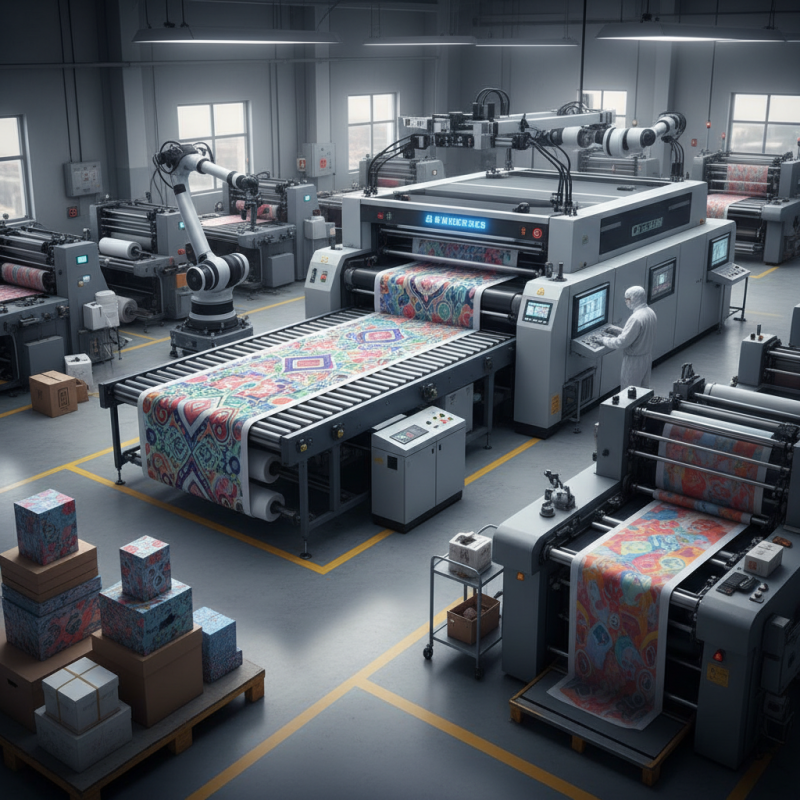
In today’s competitive landscape, understanding how does digital printing improve manufacturing efficiency is crucial. Digital printing revolutionizes traditional methods, leading to remarkable benefits for manufacturers. It streamlines production processes and reduces waste, making it a preferred choice for many industries.
Digital printing allows for quicker turnaround times. This feature significantly impacts production schedules, enabling manufacturers to respond rapidly to market demands. The ability to customize designs on-demand also enhances flexibility. However, companies must be cautious about equipment costs. Transitioning too quickly may lead to overspending without realizing the potential benefits.
Moreover, digital printing can create high-quality outputs that satisfy customer needs. Yet, quality inconsistencies can arise if not properly managed. Embracing this technology requires continuous learning and adaptation. Companies should weigh their capabilities against digital printing's advantages to ensure sustainable improvements in efficiency.
Understanding the Concept of Artificial Intelligence
Artificial Intelligence (AI) is a fascinating and complex field. At its core, AI refers to machines designed to mimic human intelligence. This includes learning, reasoning, and problem-solving. Many people find AI daunting. The rapid advancements can seem overwhelming. However, understanding foundational concepts can help demystify it.
AI is not just about robots or self-driving cars. It encompasses various technologies, including machine learning and natural language processing. Machine learning enables systems to learn from data. Natural language processing allows machines to understand human language. These technologies work together, creating applications that enhance daily life, like virtual assistants and recommendation systems.
Yet, challenges remain in AI development. Ethical considerations and biases in data can lead to unintended consequences. As professionals work to improve AI, they must reflect on these issues. Being aware of AI's limitations is crucial. Responsible development means prioritizing transparency and accountability. Understanding AI requires both curiosity and critical thinking. This evolving field demands continuous learning to navigate its complexities.
Historical Development of Artificial Intelligence Technology
Artificial Intelligence (AI) has evolved significantly since its inception in the mid-20th century.
The early days were marked by a vision of machines capable of human-like reasoning.
Researchers focused on logic and problem-solving. Yet, these initial attempts often
fell short of expectations.
Early AI systems struggled with complexity and real-world applications.
In the 1980s, a new wave of interest emerged due to advances in neural networks.
This rejuvenation brought about more effective learning algorithms.
These models mimicked human brain functions, enabling machines to learn from data. However,
limitations remained. The technology required vast computational resources,
often beyond what was available.
The 21st century introduced a surge of data and processing power. Machine learning models
became increasingly sophisticated, enabling applications like speech recognition and
image analysis. Yet, ethical concerns arose. Decisions made
by these systems sometimes lacked transparency. This led to a growing need for
responsible AI development.
Balancing innovation with ethical considerations remains a critical challenge today.
Key Applications of Artificial Intelligence in Various Industries
Artificial intelligence (AI) is transforming various industries dramatically. In healthcare, AI enhances diagnostic accuracy. Machine learning algorithms analyze medical images to help detect diseases earlier. This technology improves patient outcomes but also raises ethical questions. Data privacy is a major concern. How can we protect sensitive information?
In the financial sector, AI streamlines operations, detects fraud, and assists in risk management. Automated systems analyze transactions in real time, which helps identify unusual patterns. Yet, reliance on AI can be risky. What happens if the system fails? Errors could lead to significant financial loss.
Manufacturing also benefits from AI. Robotics and automation improve efficiency, reducing human errors and production costs. Yet, this shift can lead to job displacement. Workers may feel anxious about new technologies. Balancing innovation and employment is essential for future success.
Ethical Considerations and Challenges in AI Development
The rapid development of artificial intelligence (AI) poses significant ethical challenges. One major concern is transparency. Many AI systems operate as black boxes, making it difficult to understand their decision-making processes. This lack of clarity can result in biased outcomes, raising questions about fairness and accountability.
Another critical area is privacy. AI often relies on vast amounts of data. The collection and use of personal information can infringe on individual rights. People may not be aware of how their data is being used, leading to distrust. Strengthening data governance frameworks is essential for protecting user information. This raises a complex dilemma: how do we balance innovation with privacy rights?
Moreover, AI has a societal impact that demands thoughtful consideration. The automation of jobs is a pressing issue. While AI can improve efficiency, it may also displace workers. Communities must adapt to these changes to avoid widening the economic gap. Ethical AI development requires ongoing reflection and collaboration between technologists, ethicists, and policymakers.
Future Trends and Innovations in Artificial Intelligence Technology
Artificial Intelligence (AI) continues to evolve rapidly, shaping the future landscape of technology.
A recent report by the International Data Corporation (IDC) stated that global spending on AI systems is expected to reach $110 billion by 2024.
This growth underscores the increasing integration of AI in various sectors, from healthcare to finance.
One promising trend is the rise of explainable AI (XAI). Businesses are seeking transparency in AI models to foster trust among users.
According to a survey by Gartner, 60% of organizations will implement XAI by 2025.
This shift signifies a move towards more accountable AI systems. However, challenges remain. Many algorithms still operate as "black boxes."
Users may struggle to understand the decision-making process, leading to potential mistrust.
Additionally, AI-powered automation is transforming job markets. A report from PwC predicts that 44% of jobs could be affected by automation by the early 2030s.
While automation can boost efficiency, it raises concerns about job displacement.
Organizations must navigate this balance carefully, considering the societal impact of these technologies.
As AI develops, ongoing discussions about ethics and responsibility are crucial for its sustainable integration into everyday life.
FAQS
The 1980s saw renewed interest due to advances in neural networks, enhancing machine learning algorithms. Still, limitations existed.
AI enhances diagnostics by analyzing medical images. It detects diseases early but raises ethical data privacy concerns.
AI detects fraud and streamlines operations. However, reliance on AI can pose risks if systems fail, leading to losses.
AI improves efficiency through robotics and automation, lowering costs. Yet, job displacement causes anxiety among workers.
Explainable AI aims for transparency in AI models, helping build trust among users. Challenges remain regarding understanding decisions.
AI spending is expected to hit $110 billion by 2024, signaling growing integration in sectors like healthcare and finance.
Automation might influence 44% of jobs by the 2030s. It offers efficiency but raises concerns about job security.
Continued conversations around ethics and responsibility are vital for responsible AI development and integration into society.
Organizations need to balance innovation and its societal impact, addressing job displacement and ethical issues responsibly.
Conclusion
The article delves into the multifaceted realm of artificial intelligence (AI), exploring its historical evolution and the transformative impact it has on various industries. From its nascent stages to contemporary applications, AI has revolutionized sectors such as healthcare, finance, and manufacturing. A particular highlight is the role of digital printing technology in enhancing manufacturing efficiency. By facilitating rapid prototyping and customization, digital printing enables manufacturers to streamline their processes, reduce waste, and respond swiftly to market demands.
Moreover, the discussion addresses the ethical considerations and challenges that arise alongside AI's advancements. As the technology continues to evolve, it raises significant questions about accountability and bias. Looking ahead, the article forecasts exciting trends and innovations within AI, suggesting that continued advancements will likely lead to even greater integration of technologies like digital printing, ultimately reshaping the manufacturing landscape and driving efficiency to new heights.

 Fusion Digital Print