As the industrial printing landscape evolves, understanding its trends is crucial. Leading expert Dr. Lisa Wang, a renowned figure in the field, recently stated, “The future of industrial printing lies in adaptability and innovation.” Her insights highlight a pivotal question: what are the latest trends in industrial printing?
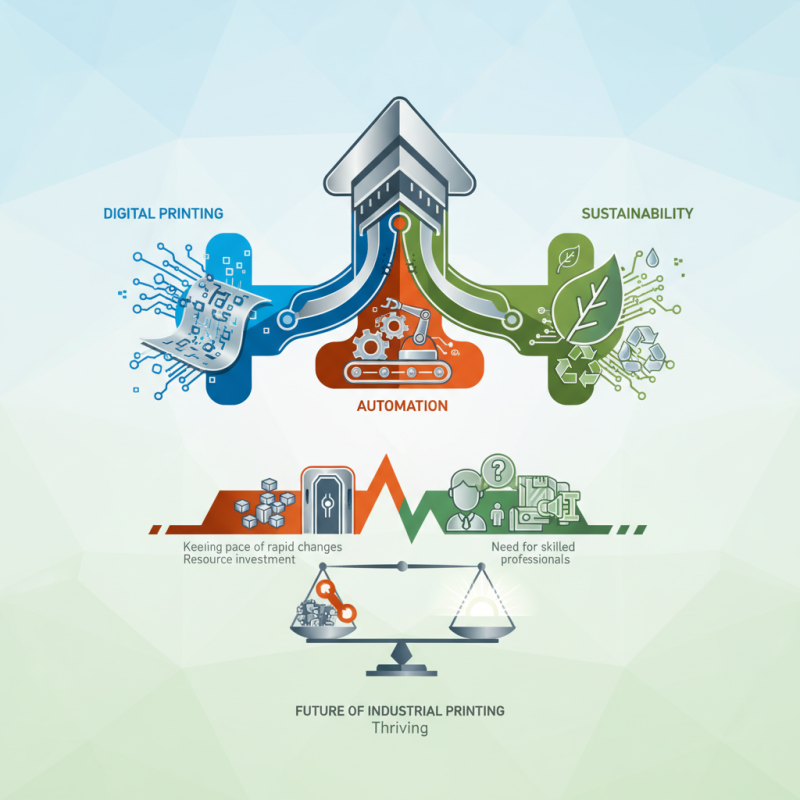
In recent years, advancements in technology have reshaped this industry. Digital printing continues to gain momentum, providing flexibility and reducing waste. Automation is also transforming workflows, enhancing efficiency while minimizing human error. Furthermore, sustainability has become a significant focus. Companies are exploring eco-friendly materials and processes to meet consumer demands.
Yet, challenges remain. Many businesses struggle to keep pace with rapid changes. Not all firms have the resources to invest in the latest technologies. There’s also a need for skilled professionals trained in emerging techniques. As the industry progresses, reflection on these barriers is essential. Embracing change while addressing these issues will determine who thrives in the future of industrial printing.
The rise of digital printing technologies in industrial applications is transforming the landscape of manufacturing. With advancements in software and hardware, companies can now achieve high-quality results efficiently. Digital printing offers flexibility and customization that traditional methods struggle to match. Manufacturers can produce small runs without significant cost increases. This capability is particularly useful in sectors requiring rapid iteration or personalization.
Industries such as textiles, packaging, and signage are experiencing significant shifts. Digital printing allows for intricate designs and quick turnaround times. However, challenges remain. The initial investment in technology can be high. Businesses must ensure their staff is adequately trained to handle sophisticated machinery. Additionally, not all substrates are compatible, which can limit creative options.
Companies are also confronting sustainability issues. While digital printing can reduce waste through precision, the environmental impact of materials used still requires attention. Recycling options and sourcing eco-friendly inks are vital considerations for responsible practice. As the industry evolves, reflection on these areas is crucial for growth and innovation.
| Trend | Description | Impact on Industry | Adoption Rate (2023) |
|---|---|---|---|
| Digital Inkjet Printing | Rapid production of high-quality images on various surfaces. | Increased customization and reduced waste in production. | 45% |
| 3D Printing Technologies | Layer-by-layer manufacturing for complex designs. | Reduced prototyping time and cost for manufacturing processes. | 30% |
| Sustainability in Printing | Use of eco-friendly inks and sustainable materials. | Improved environmental impact and brand reputation. | 50% |
| Automation and AI Integration | Smart technologies for process optimization. | Enhanced efficiency and reduced operational costs. | 35% |
| Integration of Augmented Reality (AR) | Use of AR for enhanced product visualization. | Improved customer engagement and experience. | 25% |
The shift in consumer demands is steering the industrial printing landscape toward increased customization. Modern consumers crave unique products that resonate with their personal style. This trend underscores the need for agility in production processes. Manufacturers are investing in versatile printing technologies that support small batches and personalized options. Custom labeling and packaging can enhance brand appeal, making products stand out in crowded markets.
However, this move toward customization isn't without its challenges. Balancing quality with speed can strain resources. Companies must refine their workflows to accommodate smaller runs without compromising output standards. Equipment must be updated or replaced to handle diverse materials effectively. As a result, businesses face pressure to innovate while managing costs. This delicate balance requires a strategic approach and ongoing investment in staff training and technology.
Furthermore, consumer expectations are evolving rapidly. Today's customers often request quick turnaround times on custom products. Companies must adapt their supply chains accordingly. Responsiveness is key, but it can lead to operational complexities. Navigating these demands can be daunting, yet failure to do so risks losing touch with an ever-changing market. The emphasis on adaptability will define the future of industrial printing.
Sustainability is revolutionizing the industrial printing sector. Recent developments are focusing on eco-friendly materials and reduced waste. Companies are adopting water-based inks and recyclable substrates. These changes lessen environmental impact significantly. The industry seeks to minimize carbon footprints while enhancing efficiency.
Tips: Evaluate your ink choices. Opt for eco-friendly alternatives. This small shift can yield substantial benefits over time.
Digital printing technology is playing a crucial role. It allows for shorter runs without excess waste. This flexibility supports on-demand printing. Companies can respond quickly to market demands. However, not all equipment caters to sustainability goals. Ensuring your tools align with eco-friendly practices is vital.
Tips: Regularly assess your printing equipment. Upgrade to machines that prioritize energy efficiency. It can seem costly but leads to long-term savings.
Yet, challenges remain. Many still grapple with balancing costs and sustainability. The transition to greener practices might be slow. But, investing in sustainable methods will pay off in the long run. Each effort contributes to a healthier planet.
3D printing is influencing traditional industrial printing processes in remarkable ways. The ability to create complex shapes quickly changes the landscape of manufacturing. Traditional printing often requires extensive setup and long lead times. In contrast, 3D printing allows for rapid prototyping and on-demand production, reducing waste and increasing efficiency. This shift enables businesses to respond faster to market demands.
However, the integration of 3D printing is not without challenges. Traditional printers face pressure to adapt their practices. They must invest in new technologies and training, which can be costly. Additionally, there is a learning curve. Choosing the right materials for 3D printing can be tricky. Some materials are not compatible with older systems. Striking a balance between old and new methods is essential for success in this evolving industry.
The impact of 3D printing extends beyond just efficiency. It also encourages innovation in design and creativity. Companies have more freedom to experiment with unique designs. Yet, this freedom can lead to messy outcomes. Not every experiment leads to a successful product. Understanding these potential pitfalls can help firms navigate this new terrain effectively.
The industrial printing sector is witnessing transformative changes through automation and artificial intelligence (AI). According to a report by Smithers Pira, the global market for digital printing is projected to exceed $250 billion by 2025. This shift emphasizes the necessity for enhanced efficiency. Automation technologies enable printers to reduce operational time and minimize human error. Yet, integrating these advancements requires careful planning and a rethink of existing workflows.
AI is playing a crucial role in this evolution. For instance, predictive maintenance algorithms optimize equipment performance. A study by market research firm Infotech highlights that companies employing AI in their printing processes can reduce downtime by up to 30%. However, some companies face challenges in staff training and system compatibility. Adopting new technologies demands a skilled workforce, which remains a hurdle for many.
Moreover, the reliability of these technologies is paramount. While automation and AI enhance productivity, they are not infallible. There are instances where system failures disrupt production. Industry experts argue that companies should perform regular audits and develop contingency plans to mitigate risks. In this rapidly changing landscape, adaptability and resilience are key to navigating the complexities of modern printing.
This chart illustrates the latest trends in industrial printing, highlighting the integration of automation and AI. The adoption rates include automation adoption at 75%, AI integration at 65%, with significant improvements in cost reduction (70%), speed improvement (80%), and quality enhancement (85%). These statistics reflect the growing importance of technology in optimizing printing efficiency.
: 3D printing allows for rapid prototyping and reduces lead times. This enhances efficiency in manufacturing.
They must invest in new technologies and training. This can be costly and requires careful planning.
No, it can be tricky. Some materials don't work with older printing systems.
It encourages innovation and allows companies to explore unique designs. However, not every design is successful.
Automation reduces operational time and minimizes human error. This improves overall efficiency.
AI optimizes equipment performance and reduces downtime. It can enhance productivity significantly.
Yes, system failures can disrupt production. Companies need contingency plans to manage these risks.
Very important. A skilled workforce is necessary to effectively integrate new technologies.
No, they are not infallible. Regular audits are necessary to maintain productivity and reliability.
Adaptability and resilience are crucial for navigating complexities in modern printing practices.
In the ever-evolving landscape of industrial printing, several key trends have emerged that are shaping the future of this sector. One of the most significant developments is the rise of digital printing technologies, which are increasingly being adopted for a variety of industrial applications. Additionally, shifts in consumer demands are driving a greater emphasis on customization, allowing companies to tailor their products to meet specific client needs.
Sustainability practices are also gaining traction within the industrial printing market, as businesses strive to reduce their environmental impact. Furthermore, the impact of 3D printing is transforming traditional printing processes, offering new methods and materials for production. Finally, the integration of automation and artificial intelligence is enhancing efficiency in printing operations. In summary, when considering what are the latest trends in industrial printing, it is clear that innovation, customization, sustainability, and technology are at the forefront of this dynamic industry.

Fusion Digital Print