Industrial printing is no longer limited to labels or promotional graphics. In 2026, manufacturers use it to place information, patterns, and functional materials directly onto products and components. The equipment may print on flexible film, metal panels, circuit boards, or fabric, depending on the process and production line.
So, what industries use industrial printing technology? Packaging is a visible example: printers can apply batch codes and product details to moving cartons. Automotive plants may mark dashboards, cables, and parts that need clear identification. Small details matter. A smudged code or poorly placed graphic can slow inspection, even when the print looks acceptable at first glance.
This guide examines uses across packaging, electronics, automotive, aerospace, medical devices, textiles, and construction. Each sector has different demands. Electronics makers may need precise conductive patterns, while textile producers often prioritize durable color on fabric. Medical device manufacturers also consider legibility, material compatibility, and traceability. Exact requirements vary by product and process, so buyers should confirm specifications with qualified suppliers and relevant quality teams rather than assume one printer fits every application. The picture is not perfectly neat: some industries use industrial printing for core production, while others rely on it for occasional marking or customization. That difference is worth keeping in view.
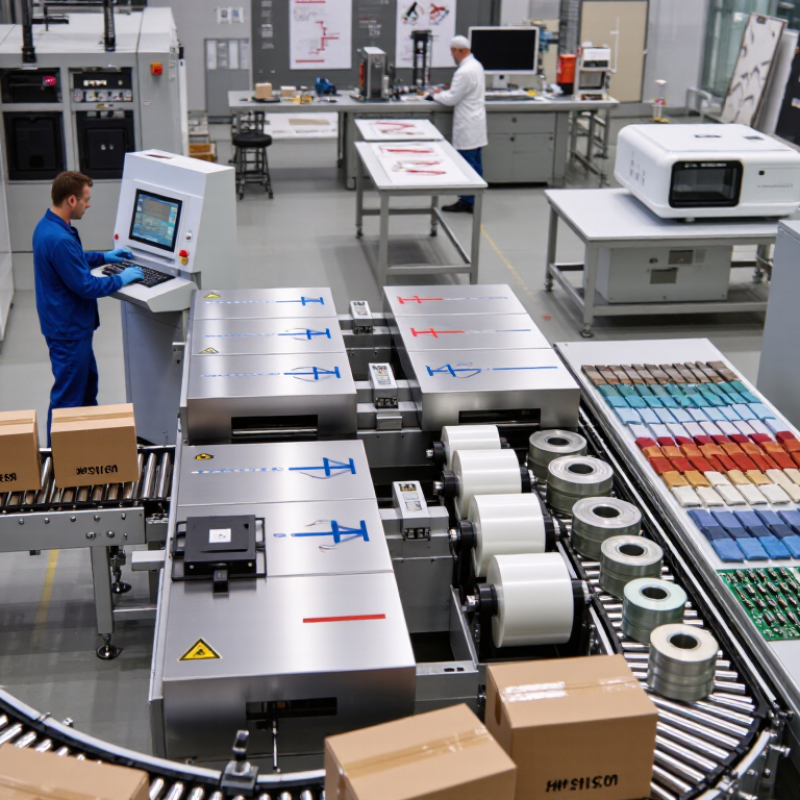
Industrial Printing and Its Role in Modern Production
Industrial printing is part of modern production, not just a way to decorate products. In 2026, manufacturers use it to add instructions, traceable codes, safety information, and functional markings directly to parts or packaging. A printed mark can help workers identify a component without opening a box. Small details matter.
Automotive plants may print serial numbers on housings, while electronics makers mark circuit boards with fine text and codes. Food and beverage facilities print dates and batch details on cartons or flexible film. Medical-device manufacturers use clear labels to support identification and tracking. Each setting brings different demands: curved surfaces, fast-moving lines, heat, moisture, or frequent cleaning. A method that works well on a dry carton may fail on a warm metal part.
Modern production connects printing equipment with design files and inspection systems, helping teams update artwork and catch missing or blurry marks. Yet integration takes careful setup. Ink adhesion, surface preparation, and printhead maintenance can affect results more than expected. Some production teams learn this only after a trial run. That is a costly lesson, but a useful one. Testing on real materials and checking samples under normal line conditions can reveal problems before full production begins.
Printing in Manufacturing, Automotive, and Aerospace
In 2026, industrial printing spans several distinct processes. Factories use inkjet and pad printing for clear graphics, while direct-part marking adds codes for tracking components. Additive manufacturing builds parts layer by layer. These methods solve different problems, so “printing” is not one shop-floor tool.
Automotive plants combine high-volume production with frequent model changes. The International Federation of Robotics reported 135,000 industrial robot installations in the automotive sector in 2023. That figure measures robots, not printers, but it shows how automated production lines can accommodate in-line marking and inspection. Printing can also create prototype parts, custom fixtures, and durable dashboard graphics. A code may look minor. It can matter when a component needs tracking later.
Aerospace uses additive manufacturing for selected lightweight brackets, ducts, and prototype components, while printed markings support identification and maintenance records. The Wohlers Report 2024 valued the global additive manufacturing industry at about $20.0 billion in 2023, up 11.1 percent year over year. That is an industry-wide figure, not aerospace revenue. Not every part qualifies. Surface finish, repeatability, and inspection still require careful control, and the process can be less tidy than a sales pitch suggests.
Printing for Packaging, Consumer Goods, and Retail
Industrial printing supports packaging, consumer goods, and retail by putting clear, durable information directly onto products and materials. On a carton line, it can print product names, handling symbols, batch details, and changing codes at production speed. Flexible film, folding board, labels, and corrugated boxes each behave differently, so ink adhesion and drying need careful testing. Small details matter.
For consumer goods, printing may appear on bottles, household containers, personal-care packaging, or appliance panels. Variable data lets manufacturers update designs or product information without replacing every printing plate. But a faster press is not automatically a better choice. Surface shape, heat exposure, abrasion, and cleaning conditions can all affect legibility. A sample print should be checked on the actual material, not just on a smooth test sheet.
Retail uses include shelf-ready cartons, promotional displays, price labels, and seasonal packaging. Strong color contrast can make key information easier to spot under bright store lighting, while scannable codes help connect physical products with digital records. Retail campaigns also change quickly, which makes shorter print runs useful—but frequent artwork changes can create avoidable errors. Teams should verify text, color, and placement before a run begins. Even with good checks, small variations between substrates can remain.
Industrial Printing in 2026: Retail’s Packaging Demand Context
U.S. e-commerce sales as a share of total retail sales, 2019–2024
Growing online retail increases the need for printed shipping cartons, labels, and product packaging. These figures show e-commerce’s share of retail sales—not industrial printing adoption. Source: U.S. Census Bureau, Quarterly Retail E-Commerce Sales.
Industrial Printing in Healthcare, Electronics, and Construction
In healthcare, industrial printing places durable information directly on device housings, trays, and packaging.
A small instrument may need a clear scale that survives repeated cleaning. Printed labels can also carry batch details and handling instructions, but legibility must be checked after exposure to moisture, abrasion, and disinfectants.
Small marks matter.
A sharp image alone does not prove that information will remain readable in daily use.
Electronics manufacturers use printing to deposit conductive or insulating materials onto flexible films, circuit substrates, and sensor components.
This can reduce material waste in some designs and support thin, lightweight parts. Yet a printed trace is not automatically a reliable circuit.
Ink thickness, curing conditions, surface preparation, and electrical testing
all affect performance. The process sounds neat on paper; production lines are less forgiving.
Construction applies industrial printing to building plans, component identification, surface graphics, and, in some settings, large-scale material deposition.
Printed marks can help crews match panels or locate installation points on a busy site. Digital plans are quick to revise, though a misplaced mark can still cause confusion.
Not always.
Teams need to verify dimensions, substrate compatibility, and print durability before relying on them outdoors. Rain, dust, and handling can expose weak choices.
That practical gap deserves attention.
How Industry Needs Shape Printing Methods and Applications
Industrial printing methods follow the material, production volume, and conditions a printed part must survive. Packaging lines often favor flexographic or gravure printing for long runs, while digital inkjet supports short runs and variable codes. The choice affects setup waste, color consistency, and how quickly designs can change. Small details matter: a curved bottle, a rough carton, or a heat-sensitive film may each require different inks and curing.
Smithers’ report The Future of Digital Printing to 2027 projected the global digital-print market would reach $230.5 billion by 2027. That growth reflects demand for shorter runs and customized output, though digital equipment is not automatically cheaper for every job. In textiles, Grand View Research valued the digital textile-printing market at $2.7 billion in 2023 and forecast 12.1% annual growth through 2030. Fabric stretch, wash durability, and color penetration shape the process; a vivid surface print may still disappoint after repeated laundering.
Electronics and automotive suppliers need marks that remain readable on small, shaped, or functional parts. Screen printing can deposit thicker layers, while inkjet can place patterns selectively and reduce material use. Neither method is a universal fix. A practical evaluation should test adhesion, abrasion, heat, and production speed on the actual substrate. That step is often skipped. It shouldn’t be.
Conclusion
Industrial printing is an essential part of modern production, helping businesses mark, decorate, label, and customize products efficiently. What industries use industrial printing technology? Its applications span manufacturing, automotive, and aerospace, where durable markings and component identification support production and maintenance. Packaging, consumer goods, and retail also rely on printed designs, labels, and product information to make items recognizable and ready for distribution.
Healthcare, electronics, and construction use printing for needs such as clear identification, detailed component markings, instructional information, and material customization. The best printing method depends on the product, surface, production volume, and required durability or precision. By matching techniques to these practical requirements, industries can improve workflow, maintain consistent output, and adapt products for different uses.

 Fusion Digital Print