In the fast-paced environment of production lines, ensuring high print quality is crucial. Many manufacturers struggle with inconsistent results. This can stem from various factors, including equipment calibration and material selection. Knowing how to improve print quality in production lines is essential for maintaining brand standards.
A common issue is the variability in ink viscosity and drying times. Deviations can lead to poor adhesion or smudging. Regular equipment maintenance can mitigate some of these risks. However, relying solely on machinery is not enough. Workforce training on best practices plays a vital role in enhancing print outcomes. Employees need to understand how to identify issues early.
Many companies overlook the importance of regular quality checks. Implementing a systematic review process can uncover hidden problems. Sometimes, even minor adjustments in temperature or humidity levels yield significant improvements. The journey to perfect print quality is ongoing and requires dedication from all team members.
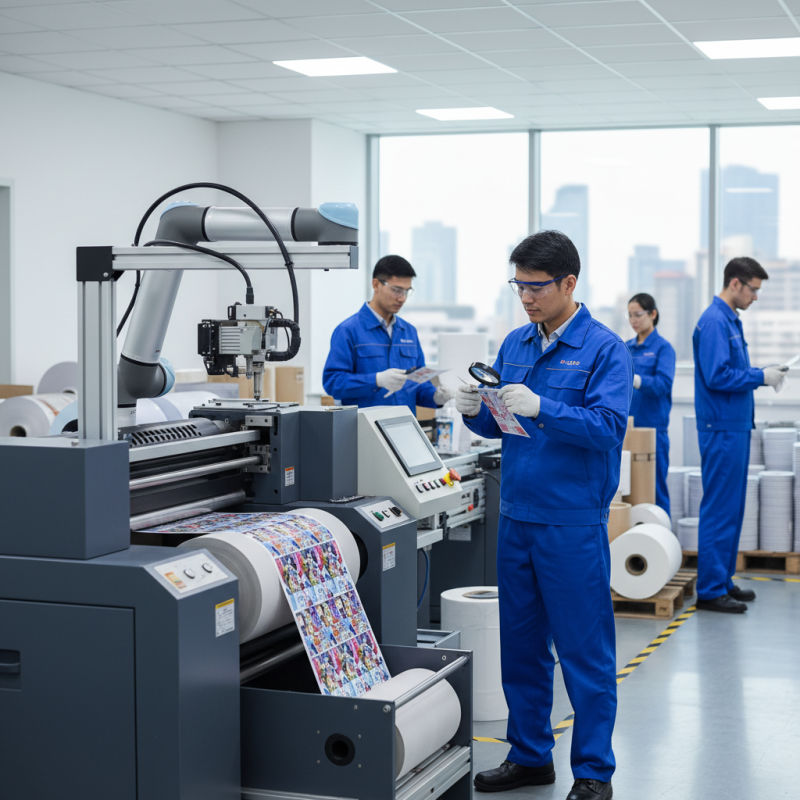
Improving print quality on production lines starts with a thorough assessment of current metrics and standards. Many organizations overlook the importance of baseline metrics. For instance, a recent study found that only 45% of production lines regularly monitor print quality metrics. This oversight can lead to significant quality issues and waste.
Using standard measures such as dot gain, color consistency, and registration accuracy can provide insights into print performance. Establishing benchmarks for these metrics can help teams identify inconsistencies. For example, maintaining a dot gain of around 20% is crucial for achieving desired color density. However, achieving this is not always straightforward, and training staff to recognize deviations is essential.
Moreover, a reliance on outdated standards can hinder progress. Many facilities still use pre-2000 industry benchmarks, which can mislead their quality assessments. A significant 30% of print professionals feel underprepared to adapt to newer technologies. Regular reviews and updates of these standards can lead to improvements in print quality, reducing rework and production costs. Revisiting these processes is vital for staying competitive and delivering high-quality outputs.
In production lines, print quality is crucial. Common issues include misalignment, ink smudging, and color inconsistency. According to industry reports, around 30% of production defects stem from printing errors. Addressing these issues enhances efficiency and reduces waste.
Tips for improving print quality include regular maintenance. Dirt and residue can cause defects. Ensure that nozzles are clean and ink flows adequately. Monitoring ink viscosity is also vital. Improper viscosity can lead to poor print results.
Another factor is environmental control. Humidity and temperature fluctuations can affect print quality. Maintain a stable environment for optimal printing conditions. Staff training also plays a key role. Educated employees can quickly identify and resolve potential problems. Collecting data on print quality will pinpoint recurring issues. Continuous assessment promotes long-term improvements.
| Issue | Description | Frequency (%) | Recommended Action |
|---|---|---|---|
| Smudging | Ink smudges on printed material, often caused by improper drying. | 15% | Increase drying time or adjust ink composition. |
| Color Variance | Inconsistencies in color output during production. | 20% | Calibrate printers regularly and monitor ink levels. |
| Blurred Text | Text appears fuzzy or unclear, impacting readability. | 10% | Check printhead alignment and resolution settings. |
| Print Misalignment | Printed elements do not align properly on the page. | 5% | Ensure proper setup of the printing mechanisms. |
| Dull Colors | Colors appear muted, lacking vibrancy in prints. | 25% | Adjust ink density and review substrate quality. |
| Banding | Horizontal stripes appear in printed output. | 10% | Check for clogged nozzles and ensure ink flow is consistent. |
Effective maintenance procedures are crucial for enhancing print quality on production lines. Regular inspections of printing equipment can identify issues early, preventing costly downtime. Technicians should check ink levels, rollers, and the print head for wear. This proactive approach reduces the risk of poor-quality prints and maintains operational efficiency.
Training staff on proper maintenance is essential. Employees should understand the equipment and follow standard operating procedures closely. Regular training sessions can reinforce best practices. Moreover, creating a checklist for daily maintenance tasks ensures nothing is overlooked. It's one way to foster accountability among team members.
However, not all maintenance practices yield immediate improvements. Some adjustments may require trial and error. Active monitoring of print quality after each maintenance step can reveal the effectiveness of procedures. Feedback loops help in fine-tuning approaches. Embracing this iterative process can lead to significant advancements in print quality on production lines.
Effective training of personnel is crucial for enhancing print quality on production lines. Workers should understand the importance of equipment maintenance. Regular checks can identify minor issues before they escalate. It's essential to establish a clear protocol for maintenance and ensure every team member is familiar with it. Training sessions should cover the intricacies of printers and other devices. Knowledge of their technical aspects empowers staff to troubleshoot problems efficiently.
Additionally, emphasizing best practices can make a significant difference. Encourage personnel to monitor print outputs regularly. Simple actions, like checking color consistency, can prevent costly mistakes. Visual aids and real-life examples in training can enhance understanding. Faulty prints should be analyzed together to identify the cause of issues. This reflection fosters a culture of continuous improvement.
Incorporating feedback loops is vital. Employees should feel comfortable sharing observations. Sometimes, small details overlooked can lead to major prints flaws. Fostering open communication creates an environment where everyone contributes to quality control. This collaborative spirit can ultimately enhance the overall output quality and efficiency on the production line.
In the world of manufacturing, print quality plays a critical role in product presentation and branding. Utilizing advanced technologies can significantly enhance print quality monitoring. For example, experts in the field have found that over 30% of production defects stem from inadequate monitoring systems. By implementing real-time quality checks, companies can detect and correct issues on the fly. This not only improves visual appeal but also boosts overall productivity.
Artificial intelligence and machine learning are vital tools for enhancing print quality. These technologies can analyze vast amounts of data to identify patterns and anomalies. Recent studies show that companies utilizing AI in their monitoring processes saw a 25% reduction in print defects. However, businesses may be hesitant to invest in such systems. Initial costs can be daunting, and the learning curve is steep. Organizations need to weigh these factors carefully against the long-term benefits.
Embracing advanced print monitoring technologies does involve risks. Dependence on automated systems could mistakenly lead to complacency. Human oversight remains crucial. Nonetheless, integrating these technologies can pave the way for improved accuracy and efficiency in print quality. Analytics-derived insights can guide staff decisions, but employees must remain engaged while utilizing these systems. Maintaining a balance between automation and human involvement is key to achieving optimal results.
: Regular maintenance enhances print quality and prevents costly downtime by identifying issues early.
Technicians should check ink levels, rollers, and the print head for wear and tear.
Training empowers employees to follow standard procedures, reinforcing best practices for equipment care.
A checklist for daily maintenance tasks promotes accountability and thoroughness among team members.
No, some adjustments may take trial and error. Active monitoring is required to assess effectiveness.
Technologies like AI can analyze data to identify patterns, leading to fewer production defects.
Dependence on automation may lead to complacency, making human oversight essential for quality control.
The initial costs and steep learning curve can be daunting, causing companies to weigh risks carefully.
Employee involvement is crucial, even with automated systems, to ensure insights guide effective decisions.
Maintenance requires continuous improvement; learning from mistakes is vital for progress in print quality.
Improving print quality in production lines is crucial for optimizing output and ensuring customer satisfaction. To achieve this, it's important to first assess current print quality metrics and standards, which serve as a benchmark for performance. Identifying common print quality issues, such as inconsistencies and defects, can help pinpoint areas that need immediate attention. Implementing effective maintenance procedures for printing equipment is vital to prevent breakdowns and ensure consistent operation.
Moreover, training personnel on best practices for print quality control fosters a culture of quality awareness and accountability. Additionally, utilizing advanced technologies for enhanced print quality monitoring enables real-time feedback and adjustments, driving continuous improvement. By systematically addressing these areas, organizations can significantly enhance their print quality on production lines and achieve operational excellence.

Fusion Digital Print