How eco friendly is digital printing technology? The answer is more complicated than a simple yes or no. Digital printing can reduce plate production, shorten setup times, and support on-demand manufacturing. These advantages may lower material waste, especially when a printer produces only the required quantity. A short run can leave fewer unused sheets stacked beside the press.
The environmental picture changes with each project. Digital presses still consume electricity, ink, cleaning materials, and replacement parts. Some ink systems also create recycling challenges when printed products reach the end of their lives. Substrate selection matters greatly. Recycled paper, certified fibers, and efficient production settings can improve performance, but they do not remove every impact.
Laurel Brunner, managing director of Digital Dots and a recognized print sustainability specialist, has said, “Sustainability is not a destination; it is a journey.” That principle fits digital printing well. The technology offers practical environmental benefits, but its value depends on how responsibly companies use it. A high-speed press running unnecessary jobs is not automatically sustainable. Neither is a recyclable substrate produced with excessive energy and poor logistics.
A credible assessment should examine the whole lifecycle. It should compare digital and conventional processes under similar conditions. It should also consider transport distance, production volume, ink chemistry, energy sources, and product durability. Some claims remain difficult to verify without transparent data. That uncertainty deserves attention.
This article explores how eco friendly is digital printing technology through evidence, expert insight, and real production choices. The goal is not to praise digital printing blindly. It is to understand where it performs better, where it falls short, and what responsible improvement looks like.
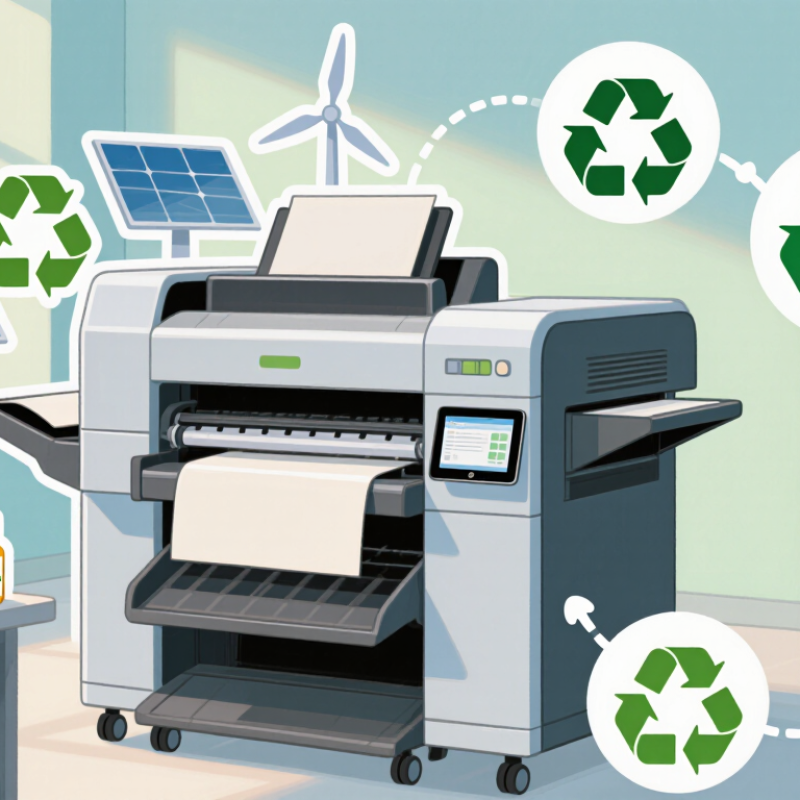
Digital printing sounds clean because it skips plates and many setup chemicals. Yet its environmental profile depends on the machine, substrate, ink, power source, and workflow. Two common systems deserve closer attention: inkjet and toner.
Inkjet places tiny liquid droplets directly onto paper or film. Water-based inks can reduce some solvent concerns, but drying may require heat or airflow. UV-curable inks dry quickly, although their chemistry and disposal needs careful review. It is mixed. Toner printing uses powdered color and heat to fuse images onto the sheet. This process creates sharp text and consistent short runs. However, the fuser consumes energy during long runs and repeated warm-up cycles. Cartridge waste and mixed-material prints may also complicate recycling. Actual performance varies.
On-demand production changes the bigger equation. Printing only the quantity needed can prevent outdated menus, labels, or manuals from becoming waste. Short runs may also reduce storage, transport, and rushed reprints. Still, digital files do not remove environmental costs. Paper sourcing, electricity, rejected sheets, and delivery distance remain measurable factors. A reliable assessment compares waste weight, energy use, and usable output across a real job. I would not call every digital press eco-friendly. I would call it a controllable option. Even a careful estimate can miss the impact of a failed batch.
| Environmental Dimension | Inkjet Printing | Toner Printing | On-Demand Production | Practical Sustainability Implication |
|---|---|---|---|---|
| Waste from Setup | Usually low | Usually low | Low because only the required quantity is produced | Digital workflows generally avoid the plates, screens, and setup sheets associated with many conventional processes. |
| Overproduction Risk | Low | Low | Very low when production is matched to actual orders | Producing closer to demand can reduce unsold books, labels, packaging, and promotional materials. |
| Printing Plate Requirement | Not required | Not required | Not required | Eliminating plates reduces plate materials, processing chemicals, storage, and disposal requirements. |
| Energy Profile | Energy is used mainly by printheads, pumps, dryers, and substrate handling | Energy is used by fusers, imaging systems, and substrate handling | Can reduce total energy per finished item by avoiding unnecessary production and storage | Actual energy use depends on machine size, print coverage, drying needs, production volume, and electricity source. |
| Drying or Fixing | Some water-based systems require heat or air drying; UV systems use curing energy | Uses heat or pressure to fuse toner to the substrate | Efficient scheduling can reduce repeated warm-up, drying, and finishing cycles | Drying and fusing can be important contributors to operational energy consumption. |
| Volatile Organic Compounds | Water-based inks generally have lower VOC emissions than solvent-based inks | Typically produces low direct VOC emissions during normal operation, although formulations differ | Lower production volumes can reduce total process emissions | Environmental performance depends on ink or toner chemistry, ventilation, curing method, and workplace controls. |
| Material Efficiency | Good for variable data and short runs | Good for short and medium runs | High when quantities closely match demand | Digital printing can reduce obsolete inventory and make small-batch production more practical. |
| Paper and Substrate Waste | Low setup waste, but trimming and print-quality checks still create waste | Low setup waste, but calibration and finishing can create waste | Usually lower overall waste when products are made only after orders are received | Paper selection, sheet layout, misprints, trimming, and finishing remain significant factors. |
| Recyclability Considerations | Water-based ink systems may be compatible with recycling, but deinking performance varies | Toner and fusing can affect paper deinking and recycling behavior | Reduced excess stock does not automatically make the printed product recyclable | Recyclability depends on the complete combination of substrate, ink or toner, coatings, adhesives, and finishing. |
| Water Consumption | Generally low because traditional fountain solution is not required | Generally low during printing | Can lower indirect resource use by reducing unwanted production | Water may still be used in paper manufacturing, equipment maintenance, cleaning, and some finishing operations. |
| Best-Fit Production Volume | Short to medium runs, variable data, packaging, and customized work | Short to medium runs, documents, and personalized materials | Single items to short or medium runs, depending on equipment and finishing requirements | Digital printing is often most resource-efficient when flexibility and low inventory are more important than very high volume. |
| Main Environmental Trade-Off | Drying energy, ink chemistry, and substrate compatibility | Fusing energy, toner formulation, and recycling compatibility | Per-unit production may be less efficient for very large standardized runs | No digital method is automatically sustainable; the result depends on the application and full life cycle. |
| Most Effective Improvement | Use efficient drying, suitable substrates, and low-impact ink systems | Optimize warm-up and fusing settings and select recyclable-compatible materials | Use demand forecasting, local production, and right-sized quantities | Reducing overproduction, choosing responsibly sourced paper, and extending equipment life can significantly improve outcomes. |
Note: Environmental performance varies by equipment configuration, print coverage, substrate, ink or toner chemistry, electricity mix, finishing process, transport, and end-of-life treatment. The comparisons above describe common industry tendencies rather than universal results.
Digital printing places images directly onto paper or film without traditional printing plates. It supports flexible, short production runs.
Inkjet systems spray tiny liquid droplets onto the selected material. Drying may need heat or moving air.Some droplets fail.A rejected sheet still consumes paper, ink, and electricity.
Toner uses powdered color and heat to fuse images onto paper. It produces sharp text and consistent short runs.Long runs consume more energy. Warm-up cycles also add demand.
No. Its impact depends on paper, ink, energy, waste, and delivery distance.It is controllable, not automatically green.A careful estimate can still miss a failed batch.
Yes, printing only the needed quantity can prevent outdated manuals or menus from piling up.A small stack can replace several dusty boxes.Frequent reprints may erase that benefit.
Paper remains a major part of digital printing’s environmental impact. A European recycling rate reached 71% in 2022.That is encouraging.However, toner, coatings, glue, and plastic can complicate sorting.
Not always. Recycled fibers may feel rougher, especially on uncoated paper.Ink appearance and finishing choices may change. The texture is not necessarily a defect.Fiber quality declines after repeated recycling.
No. They can reduce some solvent concerns, but may contain preservatives, co-solvents, pigments, and plastic binders.Drying can also require heat or airflow.“Water-based” is not a complete environmental answer.
Request VOC information, safety documents, and deinkability test results from suppliers.Use substrates tested with the selected chemistry. Check drying energy and cleaning materials.Laboratory results may not match every recycling mill.
Remove unnecessary pages, verify files, and print only the required quantity.Choose recyclable substrates and reduce heavy color coverage when possible.Measure rejected sheets.Delivery distance and storage also matter, but they are easy to overlook.
How eco friendly is digital printing technology? The answer depends on the entire production process, not just the printing press. Digital printing uses inkjet or toner systems to transfer images directly from digital files, enabling on-demand production and reducing setup materials, make-ready waste, and excess inventory. This efficiency can be especially valuable for short runs, personalized products, and rapidly changing content.
However, its environmental performance also depends on paper sourcing, ink and toner chemistry, energy consumption, transportation, and end-of-life recovery. Paper remains a major part of the impact, although Europe reported a 71% recycling rate in 2022. Water-based inks may help reduce certain emissions, while some toner and ink formulations can create challenges during paper recycling. A meaningful carbon assessment should therefore compare press energy, substrates, shipping distances, and waste together. Digital printing is not automatically sustainable, but careful material selection, efficient workflows, and accurate demand planning can significantly improve its environmental profile.

 Fusion Digital Print