In recent years, the question "is digital printing cost effective for mass production?" has gained significant attention in the manufacturing sector. According to Dr. Emily Hart, an expert in digital printing technology, “Digital printing opens up new efficiencies that traditional methods simply cannot match.” Her insights highlight the changing dynamics in printing techniques, especially for large-scale operations.
Digital printing offers rapid turnaround times. This method allows for customization without significant increases in costs. For instance, businesses can print varied designs on a single run, reducing waste. Unlike traditional offset printing, digital options eliminate extensive setup time. This efficiency contributes to overall cost savings during mass production.
However, it's vital to address challenges as well. The initial investment in digital printing equipment may be high. Furthermore, quality consistency can vary among different machines. Companies must weigh these factors carefully. Overall, understanding whether “is digital printing cost effective for mass production” involves assessing both benefits and potential drawbacks.
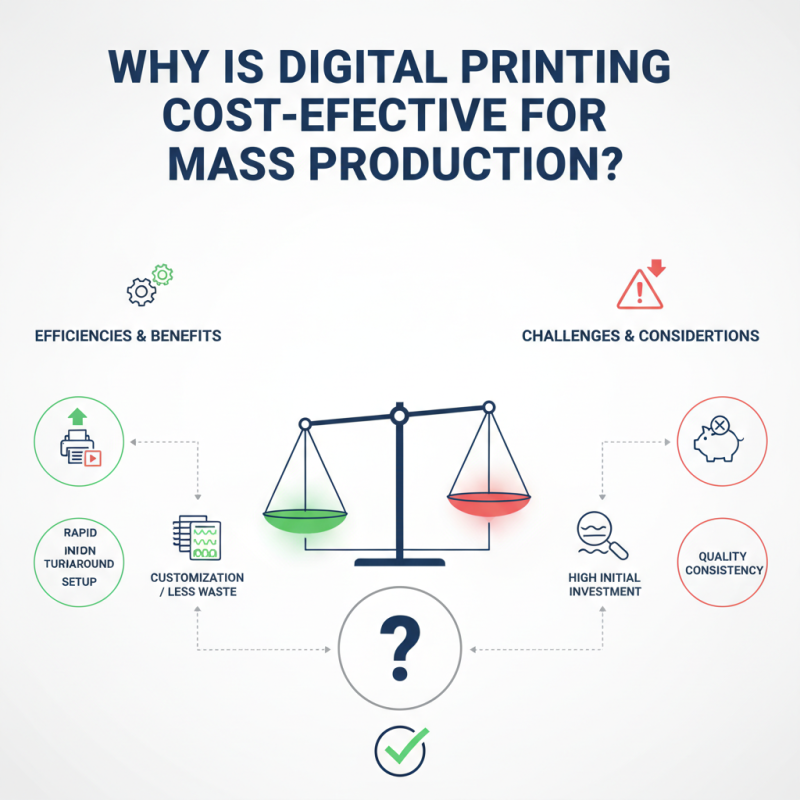
Digital printing has revolutionized mass production across various industries. It offers speed and efficiency, allowing for quick turnovers. Unlike traditional methods, digital printing eliminates the need for costly setups. Instead, it directly transfers images from a digital file to the material. This process means fewer resources wasted and lower costs per unit.
When considering digital printing for mass production, flexibility is key. It allows customization for smaller batches without breaking the bank. This adaptability is crucial for businesses aiming to meet consumer demands swiftly. Yet, relying solely on digital printing might lead to some challenges. Quality can vary depending on the technology used. It is wise to frequently assess the printing process.
**Tip:** Always perform test prints before starting large runs. This ensures quality control while avoiding costly mistakes.
Another consideration is material choice. Not all substrates work well with every digital printer. Researching compatible materials will save time and money in the long run.
**Tip:** Keep an open dialogue with your printing provider. They can offer insights and help navigate through challenges. Digital printing is an exciting area with potential. However, understanding its nuances will lead to greater success.
The chart illustrates the cost effectiveness of digital printing in various dimensions relevant to mass production. As shown, customization and production speed yield the highest effectiveness percentages, highlighting digital printing's efficiency compared to traditional methods.
Digital printing has emerged as a frontrunner in cost-effective mass production. According to a recent report by Smithers Pira, digital printing can reduce production costs by up to 30% when compared to traditional methods. This is largely due to lower setup costs and minimal waste, as digital printing allows for printing on-demand.
When comparing the two methods, traditional printing often requires large print runs to be economically viable. This leads to excessive overproduction and wasted materials. In contrast, digital printing offers flexibility. It allows businesses to print in shorter runs without sacrificing cost-effectiveness. A survey from Whittaker Associates found that 65% of businesses report that digital printing enables them to respond faster to market demands without incurring additional expenses.
However, digital printing isn't without its challenges. The initial investment in advanced technology can be a barrier for some companies. Additionally, while printing quality has improved, certain applications may still lag behind traditional processes, especially for large formats. Balancing these aspects is crucial for businesses looking to choose between methods.
Digital printing offers significant cost advantages for mass production, especially influenced by several key factors. A report by Smithers Pira indicates that digital printing reduces setup times and labor costs by up to 50%. This efficiency is crucial, particularly when producing small to medium print runs where traditional printing methods can become prohibitively expensive.
Material usage is another important factor. With digital printing, there's minimal waste since the technology allows for precise ink application. A study from the Digital Printing Association noted that companies can save around 30% on materials when utilizing digital technologies. This is a striking benefit, especially for businesses that prioritize sustainability. However, companies should be wary of the costs of high-quality ink and specialty substrates, which can impact overall savings if not managed properly.
Tips: To maximize cost-effectiveness, consider investing in a versatile digital printer that accommodates various media types. Additionally, regularly analyze print jobs for opportunities to streamline processes. Keep abreast of trends in digital printing to avoid outdated practices that could inflate costs.
| Factors | Description | Impact on Cost-Effectiveness |
|---|---|---|
| Initial Investment | Lower setup costs compared to traditional methods | Increases affordability for short runs |
| Production Speed | Faster turnaround times enable quick fulfillment | Reduces inventory costs |
| Customization | Allows for tailored products without significant extra cost | Increases market value and customer satisfaction |
| Material Waste | Minimized waste through precise printing | Lowers overall production costs |
| Digital Workflow | Streamlines the design and production process | Reduces labor costs and time |
Digital printing has transformed the landscape of mass production. On-demand printing minimizes waste and maximizes efficiency. This method allows companies to print only what they need, reducing surplus and storage costs. By only producing what is required, businesses can respond quickly to market demands.
A key benefit of on-demand printing is its adaptability. Companies can easily update designs without incurring significant costs. This flexibility supports innovation and personalization in large production runs. It fosters creativity by allowing businesses to experiment with new ideas without the fear of excess. Yet, there is a learning curve. Some may struggle with adjusting to this new process.
Moreover, on-demand printing enhances sustainability. It reduces energy consumption and material waste. However, it is essential to ensure quality control. Not all digital printing methods yield the same results. Testing and refining processes are critical to achieving the desired outcome. Embracing this approach may require adjustments, but the long-term benefits often outweigh the challenges.
Digital printing is transforming mass production with a focus on environmental sustainability. Traditional printing methods often produce a significant amount of waste. In contrast, digital printing generates less waste by using only the necessary materials. A report from Smithers Pira states that digital printing can reduce material waste by up to 30%. This efficiency not only conserves resources but also lowers production costs.
Additionally, the energy consumption in digital printing is often lower. A study indicated that digital printers can use up to 50% less energy compared to conventional methods. This not only helps in reducing operational costs but also contributes to lower carbon emissions.
However, challenges still exist. Not all digital inks are environmentally friendly. Some can contain hazardous materials, which raises concerns about their long-term impact. The industry is moving toward greener inks, but the transition is ongoing and requires further innovation.
Investing in sustainable practices is essential, yet it is also necessary to address these complexities. Companies must evaluate their processes continuously. The goal should be a balanced approach that maximizes efficiency while minimizing environmental harm. As technology advances, the potential for more sustainable digital printing grows, but the industry must remain vigilant about its ecological footprint.
: Digital printing can reduce production costs by up to 30% compared to traditional methods.
It allows for printing on-demand, which reduces surplus and unused materials.
Companies can print shorter runs and update designs quickly without significant costs.
It generates less waste, conserves resources, and reduces energy consumption, using up to 50% less than traditional methods.
Yes, certain applications may not match the quality of traditional printing, especially for large prints.
The initial investment in advanced technology can be a barrier for some businesses.
It allows businesses to experiment with designs without the fear of overproduction.
Not all digital printing processes yield consistent results, requiring testing and refinement.
Continuous evaluation of processes can help in maximizing efficiency while minimizing environmental harm.
No, some digital inks can contain hazardous materials, posing long-term environmental concerns.
Digital printing has emerged as a transformative solution for mass production, prompting the question, "is digital printing cost effective for mass production?" This method offers significant advantages over traditional printing techniques, particularly in terms of cost. Unlike conventional methods, which often require extensive setup time and resources, digital printing streamlines production processes, reducing both labor and material costs.
Cost-effectiveness is influenced by several factors, including lower inventory expenses, as digital printing supports on-demand production. This capability minimizes waste and aligns with sustainability goals, making it an environmentally friendly option. Additionally, the flexibility of digital printing allows for quick adjustments and customization in large production runs, further enhancing its financial viability. Overall, the benefits of digital printing in mass production make it an increasingly attractive choice for businesses looking to optimize costs while meeting consumer demands.

Fusion Digital Print