China Top 10 Printing Machines for Line Integration explores equipment choices for factories seeking consistent print quality and smoother production flow. The right machine must do more than print well. It should fit the line’s speed, product dimensions, materials, and downstream packaging process. This guide compares options for applications ranging from labels and cartons to flexible packaging, while noting where capabilities depend on configuration.
A useful production principle comes from Toyota Production System architect Taiichi Ohno: “Where there is no standard, there can be no kaizen.” This widely attributed saying is not about printing specifically, but it applies to integration: define the process before connecting the equipment. For anyone researching how to integrate printing machines into production lines, practical checks include conveyor height, web tension, print registration, curing time, inspection systems, and communication with line controls. A mismatch at one transfer point can cause jams or spoil otherwise clean print runs.
Small details matter. A machine may meet the rated speed on paper, yet struggle during frequent changeovers or with delicate stock. The rankings therefore consider print method, operating flexibility, automation options, maintenance access, and fit with adjacent equipment. They are a starting point, not a substitute for a site assessment. One limitation deserves attention: published specifications rarely show how a machine performs under every real production condition. A trial using your actual substrate and line settings is still essential.
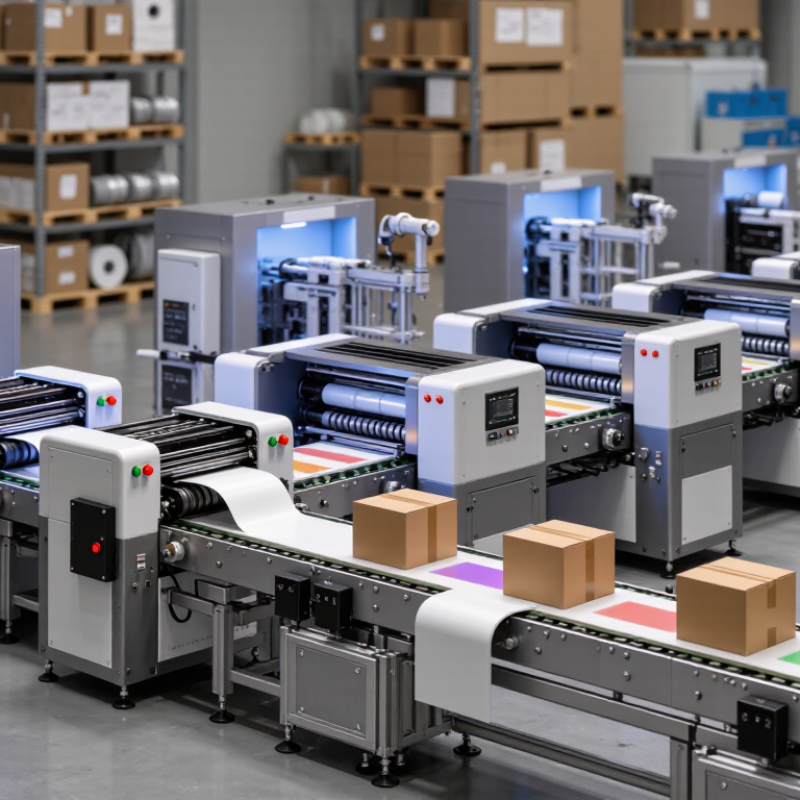
Line integration connects printing with feeding, drying, inspection, and finishing in one coordinated workflow. In modern plants, machines must exchange job settings and production signals, not merely sit beside one another. A shared control system can reduce manual data entry and reveal bottlenecks, such as sheets waiting between the press and dryer. That gap matters.
Smithers’ 2023 report, The Future of Global Printing to 2028, estimated the global print market at US$818.6 billion in 2023. It forecasts US$834.3 billion by 2028. These figures describe market value, not the guaranteed return from automation. For Chinese buyers comparing printing machines, check whether each unit supports compatible interfaces, practical changeovers, and reliable inspection data. Ask suppliers to demonstrate a complete job change, from feeder settings to finished output. A line can look integrated on paper and still rely on operators to re-enter data. That is easy to overlook. Integration also needs staff training, maintenance planning, and a clear response when one station stops. Perfect connectivity is not the whole answer; sometimes a simpler line is easier to run.
| No. | Printing Machine Type | Typical Applications | Suitable Substrates | Common Line Integration Points | Integration Considerations |
|---|---|---|---|---|---|
| 1 | Flexographic Printing Press | Flexible packaging, labels, paper bags, and corrugated packaging | Paper, paperboard, films, and some nonwoven materials | Unwind and web guiding; in-line drying; laminating, coating, or die-cutting; rewind or sheeting | Coordinate web tension, print registration, ink drying, and substrate handling across connected stations. |
| 2 | Rotogravure Printing Press | Long-run packaging, decorative materials, and publication printing | Plastic films, paper, foil, and laminated webs | Unwind; web cleaning; ink units and dryers; solvent-management equipment; inspection; rewind or lamination | Plan for controlled web tension, dryer airflow, exhaust handling, and color-to-color registration. |
| 3 | Sheet-Fed Offset Press | Commercial printing, brochures, folding cartons, and other paperboard products | Paper and paperboard sheets | Feeder; printing units; coating unit where fitted; delivery; inline or near-line inspection and finishing | Match sheet size, caliper, delivery pile handling, and drying or curing requirements with downstream equipment. |
| 4 | Web Offset Press | Newspapers, magazines, catalogs, and other high-volume publications | Continuous paper rolls | Roll stands; web tension control; printing units; folder; cutting, stacking, or mailing equipment | Synchronize web speed and folding or cutting operations; allow for roll changes and paper-break detection. |
| 5 | Digital Inkjet Press | Short-run packaging, variable-data work, labels, and commercial print | Coated or treated paper, board, labels, and compatible films | Sheet feeder or unwinder; print engine; curing or drying; camera inspection; cutting, slitting, or rewinding | Confirm substrate compatibility, ink curing needs, data workflow, and synchronization with finishing equipment. |
| 6 | Screen Printing Press | Signs, specialty graphics, industrial markings, and printed functional layers | Paper, plastic, glass, textiles, metal, and other compatible flat or shaped surfaces | Loading and positioning; screen-printing station; flash or conveyor dryer; unloading and inspection | Consider fixture design, registration accuracy, ink deposit and curing requirements, and safe material movement. |
| 7 | Rotary Screen Printing Press | Continuous printing on labels, packaging webs, and textiles | Paper, films, labels, and compatible textile webs | Unwind and web guiding; rotary screen station; drying or curing; additional print units; rewind or converting | Match web speed and tension to the rotary station and dryer; check registration when combining processes. |
| 8 | Pad Printing Machine | Printing on small, curved, recessed, or irregularly shaped products | Compatible plastic, metal, glass, and coated product surfaces | Part feeding; locating fixtures; print station; optional curing; part unloading and inspection | Integration depends on consistent part orientation, fixture repeatability, cycle timing, and surface preparation. |
| 9 | Letterpress Label Press | Labels, tickets, and specialty printed work, including finishing operations | Label stock, paper, and compatible pressure-sensitive materials | Web unwind; printing units; die-cutting, embossing, or stripping; slitting and rewinding | Control web registration and tension, and coordinate print stations with die-cutting and waste removal. |
| 10 | Corrugated Flexographic Printer-Slotter | Printed corrugated shipping boxes and display packaging | Corrugated board sheets | Sheet feeding; flexographic printing; slotting or die-cutting; folding and gluing; counting and stacking | Coordinate sheet feeding, board handling, print registration, and downstream folding or stacking speeds. |
It connects presses with feeding, drying, inspection, and finishing equipment through shared settings and production signals. Machines simply placed side by side are not fully integrated.
Flexographic presses suit many packaging webs, while digital inkjet supports short runs and variable artwork. Gravure, offset, and screen presses serve other materials and print requirements.
Match the press to substrate, order length, print width, and floor space. Check usable speed, drying method, and changeover time. A headline speed can mislead.
Confirm infeed and outfeed heights, sheet alignment or web tension, and inspection signals. Also check connections to coating, cutting, folding, or packing equipment.
Test with your own stock and typical artwork. Record waste, registration stability, and usable speed. Real shifts vary.
Mismatched drying times or poor sheet handling can hold up every connected station. A neat diagram can fool you. Small gaps matter.
No. The global print market was estimated at US$818.6 billion in 2023 and forecast at US$834.3 billion by 2028. Market value does not prove a machine will deliver a return.
Check operator training, maintenance plans, spare-part lead times, and service response. Leave room to reach equipment; compact layouts can make repairs awkward.
This article explores how line integration transforms printing from a series of separate operations into a coordinated production process. It introduces the main types of printing machines used in integrated lines, including equipment for printing, feeding, drying, finishing, and inspection, and outlines ten machine categories suited to different production needs. Rather than treating each machine as an isolated unit, the article explains how materials and production information can move between stages with consistent timing and fewer interruptions.
Readers will also learn how to integrate printing machines into production lines by considering compatibility, output capacity, material handling, automation, available floor space, and maintenance requirements. Careful selection and connection of equipment can help create a smoother workflow, improve production consistency, and make it easier to adapt the line to changing products or volumes. The focus is on practical integration principles, not on any particular manufacturer.

 Fusion Digital Print