In recent years, the printing industry has witnessed a transformative shift from traditional methods to digital printing. Research from Smithers Pira indicates that the digital printing market is projected to grow by approximately 13% annually, reaching $29 billion by 2025. This significant growth raises the question: what are the advantages of digital printing over traditional printing?
Experts in the field, such as Dr. Jane Hawkins, a leading authority on printing technologies, note, "Digital printing’s flexibility allows for short runs and customized outputs that traditional methods simply can’t match." This flexibility opens doors for businesses to engage in on-demand printing, reducing waste and inventory costs.
The immediacy and quality of digital outputs continue to attract attention. However, there are still challenges to address. For instance, some traditional techniques excel in color quality for large runs. As businesses navigate these landscapes, understanding the varying strengths and weaknesses is crucial. This exploration of digital versus traditional methods highlights evolving industry standards and the need for thoughtful consideration of each approach.
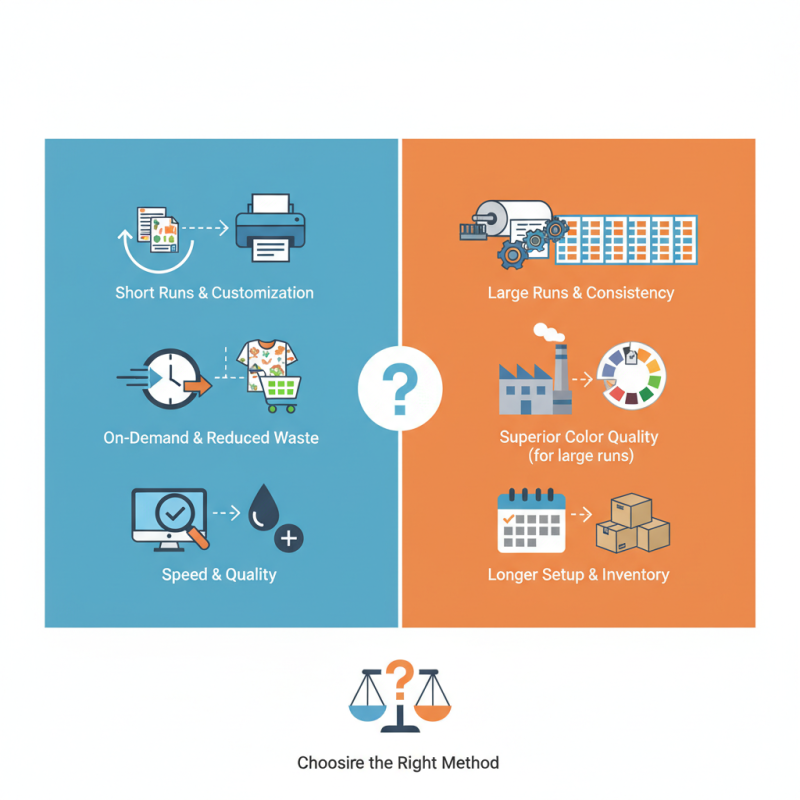
Overview of Digital Printing and Traditional Printing
Digital printing and traditional printing represent two distinct approaches to creating printed materials.
Digital printing utilizes modern technology. This process allows for fast turnaround times and customization.
It can print directly from digital files. This means no need for printing plates. Consumers often appreciate the ability to create unique designs.
However, some might question the quality of digital outputs compared to traditional methods.
Traditional printing, such as offset, emphasizes quality and consistency.
This approach often uses plates to transfer ink onto paper. The colors can be richer, with finer details.
However, this method can be time-consuming and costly for smaller runs. Some print jobs may require longer setup times.
This can delay delivery and increase costs.
Businesses often weigh these factors when deciding which method to use.
It's essential to consider the specific needs of each project.
Digital printing may offer flexibility, while traditional printing may provide a more polished finish.
Ultimately, industry professionals must evaluate their requirements, costs, and expected outcomes.
Each printing method presents its own set of advantages and challenges in the evolving landscape of print media.
Key Advantages of Digital Printing over Traditional Printing
Digital printing has transformed the landscape of the printing industry. It offers several advantages that traditional printing methods cannot match. One significant advantage is the speed of production. According to a report by Smithers Pira, digital printing processes can be up to 75% faster than traditional methods. This speed allows businesses to respond quickly to market demands. Shorter turnaround times can lead to increased customer satisfaction.
Another key benefit is the ability for customization. Digital printing makes it easier and more cost-effective to produce small runs of unique designs. A study from the Digital Printing Association noted that over 60% of customers prefer personalized printed materials. This ability to tailor products for different audiences is crucial in today’s competitive market.
However, digital printing does have its limitations. The quality of certain materials may not meet the standards of traditional methods, particularly in large formats. Additionally, the initial setup costs can be high for some businesses. Thus, while digital printing presents clear advantages, companies must consider their specific needs and circumstances before making a transition. Each approach has merits that depend on the particular project at hand.
Cost Comparisons Between Digital and Traditional Printing
Digital printing and traditional printing each have unique cost structures that can significantly impact your budget.
Digital printing often has lower upfront costs, especially for short runs.
This method eliminates the need for expensive plates and setup processes.
Traditional printing may involve higher costs for longer runs, but it can be more economical when producing large volumes,
particularly for offset printing.
Understanding the nuances of each option is vital.
Digital printing allows for customization on a per-piece basis without added costs.
In contrast, traditional methods excel at providing cost benefits for mass production.
You might save money with traditional printing when printing thousands of pieces,
but digital printing provides flexibility and faster turnaround times for smaller batches.
Tips:
Consider your project scope. If you need a handful of prints, digital is your ally.
Always analyze your design.
Simpler designs may translate well into cost savings with traditional printing.
Evaluate hidden costs, such as shipping and storage, associated with bulk orders in traditional printing.
Reflect on your needs carefully to choose wisely between the two options.
Quality and Versatility in Digital vs Traditional Printing
Digital printing and traditional printing both offer unique qualities and versatility.
Digital printing excels in producing vibrant colors with precision. It can quickly adapt to different designs, making it ideal for short runs and personalized projects.
Each print can be slightly altered without the need for an entirely new setup, which saves both time and resources. However, the initial investment in high-quality digital printers can be substantial.
Traditional printing, on the other hand, offers a distinctive tactile quality that often appeals to customers. Techniques like offset and letterpress printing create depth and texture that digital methods may struggle to replicate.
This can be an important factor for items such as business cards or art prints, where the look and feel can enhance branding and artistic expression. Yet, traditional methods can be less flexible.
They often require a larger volume to justify the setup costs, leading to waste if adjustments are needed.
While digital printing supports swift changes and diverse applications, traditional methods instill a sense of craftsmanship. Each option has its merits.
Balancing speed with quality can be challenging, inviting businesses to reflect on their specific needs and audience preferences. Adjusting to both worlds may yield the best results, but each method requires careful consideration and strategy.
Environmental Impact of Digital Versus Traditional Printing Techniques
Digital printing and traditional printing techniques have distinct environmental impacts.
Digital printing typically produces less waste. Traditional processes often require large setups, resulting in excess materials.
In digital printing, setup is minimal, meaning fewer resources are consumed upfront. This can significantly lower the carbon footprint during production.
Another aspect is chemical use. Traditional printing often employs
harmful solvents and chemicals. These can contribute to pollution and waste issues. In contrast, many digital printers utilize water-based inks.
This results in healthier practices and less environmental risk. However, digital printing technology is still developing.
There are concerns about the production of electronic waste and energy consumption.
Recycling is also a critical factor.
Traditional printed materials are often easier to recycle than digital products. Digital prints may use inks that don’t break down as easily. This can create challenges in the recycling process.
While digital methods are advancing, they may still need improvement in sustainable practices. Each printing method has its pros and cons.
Choosing the right one often requires careful consideration of environmental effects.
Conclusion
Digital printing offers distinct advantages over traditional printing methods, making it a favorable choice for many businesses and individuals. One of the key advantages of digital printing over traditional printing is its cost-effectiveness for short runs, allowing for lower setup costs and quicker turnaround times. Additionally, digital printing provides superior quality and versatility, accommodating a wide range of materials and enabling custom designs with minimal restrictions.
In terms of environmental impact, digital printing is usually more sustainable, as it reduces waste and energy consumption compared to traditional methods. Overall, understanding what are the advantages of digital printing over traditional printing can help users make informed decisions based on their specific needs, whether for personal projects or commercial purposes.

 Fusion Digital Print